 Language
 English
 русский
 Español
 عربى
عربى
Industry News
What is an LED Street Light?
An LED street light is a road lighting fixture that uses Light Emitting Diodes (LEDs) as its light source. It is primarily used for outdoor illumination in applications such as urban roads, highways, bridges, tunnels, industrial parks, parking lots, and other public areas.
Compared with traditional street lights (such as high-pressure sodium lamps or metal halide lamps), LED street lights offer significant energy efficiency advantages and a much longer operational lifespan.
Content
1. Key Features of LED Street Lights
|
Feature |
Description |
|
High Energy Efficiency |
Saves 50%–70% energy compared to high-pressure sodium lamps; luminous efficacy reaches 130–200 lm/W |
|
Long Lifespan |
Design life typically 50,000–100,000 hours, significantly reducing maintenance costs |
|
Instant Start |
No warm-up time; supports frequent on/off switching |
|
Good Color Rendering |
Color Rendering Index (CRI) typically ≥70, superior to high-pressure sodium lamps (CRI ≈ 20–25), improving road surface visibility |
|
Directional Light Distribution |
Precise optical lens design minimizes light pollution and focuses illumination on the roadway |
|
Intelligent Control |
Easily integrates dimming, timing control, motion sensing, remote monitoring, and other smart functions |
|
Environmentally Friendly |
Contains no mercury, lead, or other hazardous substances; recyclable |
2. Comparison with Traditional Street Lights
|
Parameter |
High-Pressure Sodium (HPS) |
LED Street Light |
|
Luminous Efficacy |
80–120 lm/W |
130–200 lm/W |
|
Lifespan |
12,000–24,000 hours |
50,000–100,000 hours |
|
Color Rendering Index (CRI) |
20–25 |
70–85 |
|
Start-up Time |
3–10 minutes warm-up |
Instant start |
|
Maintenance Frequency |
High |
Low |
|
Smart Compatibility |
Poor |
Excellent (dimming, sensing, networking) |
3. Typical Structure of an LED Street Light
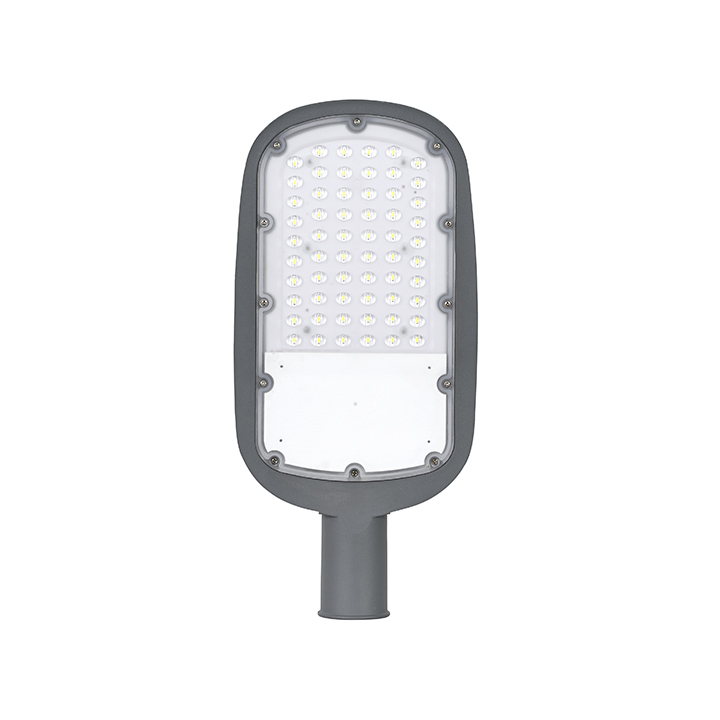
An LED street light consists of the following main components:
Housing : Typically made of die-cast or extruded aluminum alloy, balancing lightweight construction with heat dissipation
Thermal Management System : Passive cooling via heat sink fins to ensure LED chips operate at optimal temperatures
LED Light Source Module : Multiple LED chips integrated with optical lenses for precise light distribution
Driver / Power Supply : Converts mains power to constant current required by LEDs; typically features waterproofing and surge protection
Optical Lens : Provides precise light distribution patterns (e.g., Type I, II, III, IV, V) to suit various road widths and mounting configurations
Ingress Protection (IP) Rating : Typically IP65 or higher, ensuring waterproof and dustproof performance in harsh outdoor environments
4. Applications
|
Application |
Characteristics |
|
Urban Arterial Roads |
High brightness and uniformity requirements; typically use high-power LED street lights |
|
Secondary Roads & Branch Roads |
Medium to low power; focus on energy efficiency and light distribution |
|
Highways |
Long-distance illumination; requires high reliability and low maintenance |
|
Industrial Parks / Parking Lots |
Can be configured with motion sensors for on-demand lighting |
|
Tunnels |
Requires adaptation to light-dark transitions; often used with dimming controls |
|
Smart City Applications |
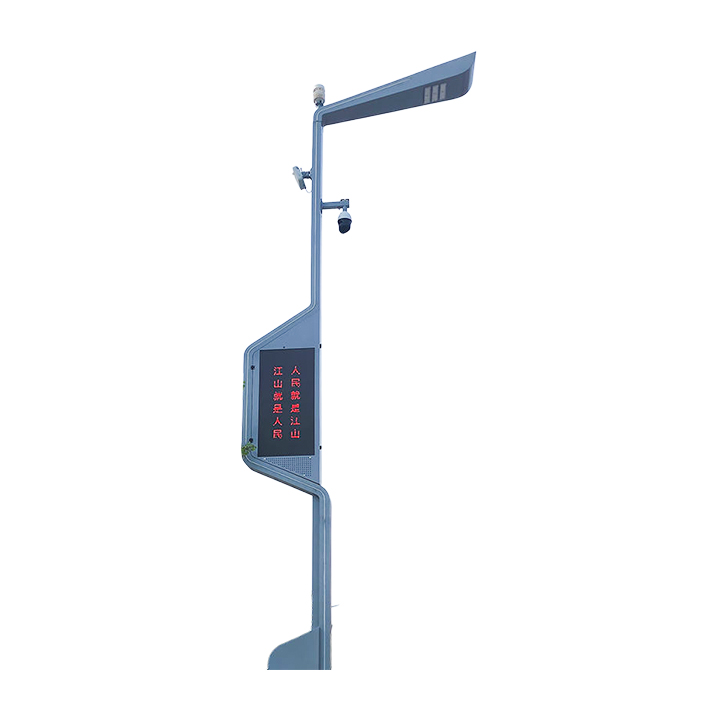
Serves as a carrier for smart poles, integrating surveillance cameras, sensors, 5G base stations, and more |
5. Industry Standards & Selection Guidelines
When selecting or evaluating LED street lights, the following key parameters should be considered:
Luminous Efficacy (lm/W) : Higher values indicate better energy efficiency
Correlated Color Temperature (CCT) : Typically 3000K–4000K for road lighting, balancing visual comfort and light penetration
Ingress Protection (IP) Rating : Recommended IP65 or higher
Impact Protection (IK) Rating : Recommended IK08 or higher
Driver Quality : Prefer drivers from reputable brands to ensure service life and reliability
Light Distribution Curve : Select the appropriate optical design based on road width, pole height, and spacing
Applicable Standards : Reference standards such as CJJ 45-2015 (Urban Road Lighting Design Standard, China), GB/T 24907-2010, IESNA LM-79, EN 13201, etc.
Previous Post
What is a Solar Street Light?
Next Post
What is Hot-Dip Galvanizing?
Related Products
If you are interested in our products, please consult us
CONTACT DETAILS
-
Guoji Lighting Industrial Park,Northern Suburb of Yangzhou City

-
+86-0514-84242668

-
[email protected]

PRODUCTS
QUICK LINK
QR CODE
Copyright © JIANGSU TIANHUANG LIGHTING GROUP CO.,LTD. All Rights Reserved.
China LED street light manufacturer Custom metal street light pole supplier