 Language
 English
 русский
 Español
 عربى
عربى
Industry News
What are the advantages of LED street lights?
Content
- 1 What are the advantages of LED street lights?
- 1.1 Dramatic Energy Savings That Reduce Operating Costs
- 1.2 Exceptionally Long Lifespan Reduces Maintenance Burden
- 1.3 Superior Light Quality Improves Visibility and Safety
- 1.4 Significant Reduction in Carbon Emissions and Light Pollution
- 1.5 Smart Controls and Network Integration Enable Adaptive Management
- 1.6 Robust Performance Across Extreme Conditions
- 1.7 Key Advantages at a Glance
- 1.8 Who Benefits Most From LED Street Light Upgrades
- 2 Why choose LED street lights?
- 2.1 Unmatched Energy Efficiency Cuts Electricity Bills Immediately
- 2.2 Long Lifespan Means Far Fewer Replacements and Lower Maintenance Costs
- 2.3 Better Light Quality Enhances Road Safety and Pedestrian Confidence
- 2.4 Smart Control Compatibility Unlocks Additional Savings and Management Efficiency
- 2.5 Environmental Benefits Support Sustainability Goals and Regulatory Compliance
- 2.6 Durability and Reliability in Demanding Outdoor Environments
- 2.7 How LED Street Lights Compare to Conventional Options
- 2.8 Common Applications Where LED Street Lights Deliver the Strongest Results
- 3 How do LED street lights differ from traditional street lights?
- 3.1 Different Light-Generation Technologies at the Core
- 3.2 Energy Efficiency: LED Uses Significantly Less Power for the Same Output
- 3.3 Lifespan: LED Lasts Three to Five Times Longer Than Conventional Lamps
- 3.4 Light Quality: Color Rendering, Uniformity, and Spectral Output
- 3.5 Startup Behavior: Instant-On vs. Warm-Up Delay
- 3.6 Dimming and Smart Control Capability
- 3.7 Environmental and Safety Differences
- 3.8 Physical Construction and Weather Resilience
- 3.9 Side-by-Side Summary of Key Differences
- 3.10 What These Differences Mean in Practice
- 4 What is the lifespan of an LED street light?
- 4.1 How LED Lifespan Is Measured: Understanding L70 and Lumen Maintenance
- 4.2 LED Lifespan Compared to Traditional Street Lighting Technologies
- 4.3 Key Factors That Affect How Long an LED Street Light Actually Lasts
- 4.4 How Lifespan Translates Into Real Maintenance Savings
- 4.5 The Role of Lumen Depreciation: Why Brightness Matters Beyond Lamp Life
- 4.6 How to Extend LED Street Light Lifespan in the Field
- 4.7 What to Look for in Lifespan Specifications When Selecting LED Street Lights
- 5 How do I choose the right LED street lights?
- 5.1 Step One: Define Your Road Class and Required Illuminance Level
- 5.2 Step Two: Determine Wattage Based on Mounting Height and Pole Spacing
- 5.3 Step Three: Select the Right Optical Distribution for Your Road Geometry
- 5.4 Step Four: Choose the Correct Color Temperature for the Environment
- 5.5 Step Five: Verify Key Technical Specifications Before Purchasing
- 5.6 Step Six: Decide Whether Smart Controls Are Required
- 5.7 Step Seven: Check Certifications and Compliance
- 5.8 Quick-Reference Checklist for LED Street Light Selection
What are the advantages of LED street lights?
LED street lights outperform conventional alternatives — including high-pressure sodium (HPS) and metal halide lamps — across every major metric. They consume up to 60–75% less energy, last 3–5 times longer, and deliver superior light quality, making them the dominant choice for municipalities, highway authorities, and private developments worldwide. If you are evaluating a street lighting upgrade, the evidence strongly favors LEDs.
Dramatic Energy Savings That Reduce Operating Costs
Energy consumption is the single largest ongoing cost in street lighting. A standard 150W HPS street light can be replaced by a 45–60W LED fixture delivering the same or greater illumination. Across a city with 100,000 street lights, this translates to tens of millions of kilowatt-hours saved annually.
Real-world deployments consistently confirm these figures:
- Los Angeles replaced over 140,000 street lights and reported energy savings exceeding 63%, saving roughly $8 million per year.
- Many European cities have documented 50–70% reductions in street lighting electricity bills within two years of switching.
- Dimming controls — possible only with LED systems — can push savings even further, reducing output by 30–50% during low-traffic hours.
These savings typically result in a payback period of 3–7 years, after which the financial benefit is pure gain over a lifespan of 15–25 years.
Exceptionally Long Lifespan Reduces Maintenance Burden
Traditional HPS lamps typically last 15,000–24,000 hours. LED street lights routinely achieve 50,000–100,000 hours of rated life — with some commercial-grade products rated beyond 150,000 hours. For a fixture operating 12 hours per night, this means:
| Light Source | Rated Lifespan (hours) | Years at 12 hrs/night | Replacements over 25 years |
|---|---|---|---|
| High-Pressure Sodium (HPS) | 15,000–24,000 | 3–5 | 5–8 |
| Metal Halide | 10,000–20,000 | 2–4 | 6–12 |
| LED | 50,000–100,000+ | 11–22+ | 1–2 |
Fewer replacements mean fewer maintenance crew deployments, less traffic disruption during repairs, and significantly reduced labor and material costs. For large networks spanning thousands of poles, this represents a substantial reduction in total cost of ownership.
Superior Light Quality Improves Visibility and Safety
Light quality is not merely aesthetic — it directly affects road safety. LEDs excel in several measurable dimensions:
Color Rendering Index (CRI)
HPS lamps produce a yellow-orange glow with a CRI of 20–25, making colors appear distorted. LEDs typically achieve CRI values of 70–90+, enabling drivers and pedestrians to accurately distinguish colors — critical for reading road signs, recognizing hazards, and identifying individuals.
Directional Light Output
Unlike omnidirectional bulbs that waste light upward and sideways, LEDs emit light directionally. This allows optical systems to concentrate illumination precisely on the road surface, reducing wasted light by 30–50% and minimizing glare for drivers.
Instant-On Performance
HPS lamps require a warm-up period of 3–5 minutes to reach full output. LEDs reach full brightness instantaneously, an important safety feature when lights are triggered by motion sensors or switched on after a power interruption.
Significant Reduction in Carbon Emissions and Light Pollution
Street lighting accounts for approximately 19% of global electricity consumption used for lighting. Transitioning to LEDs has a direct impact on carbon output. For every 100,000 HPS fixtures replaced with LEDs, annual CO2 reductions can reach 10,000–20,000 metric tons, depending on the local electricity grid's carbon intensity.
LED systems also address light pollution more effectively:
- Precise optical design limits upward light scatter, reducing sky glow in urban areas.
- Warmer-color LEDs (2700–3000K) are available to minimize impact on nocturnal wildlife and human circadian rhythms.
- Adaptive dimming means lights only emit full output when actually needed, reducing unnecessary nighttime illumination.
Smart Controls and Network Integration Enable Adaptive Management
LEDs are inherently compatible with electronic dimming and networked control systems in a way that HPS technology is not. Modern LED street lighting systems can be connected to centralized management platforms that enable:
- Remote monitoring — operators can detect outages and failures in real time without physical inspection.
- Scheduled or sensor-based dimming — lights automatically dim to 30–50% output during low-traffic hours, compounding energy savings.
- Adaptive control — brightness responds dynamically to weather, pedestrian presence, or event-driven demand.
- Predictive maintenance — performance data is logged over time to identify fixtures approaching end of life before they fail.
Cities that deploy smart LED networks have reported combined energy and maintenance savings of 50–80% compared to unmanaged legacy systems.
Robust Performance Across Extreme Conditions
Street lights must operate reliably in demanding outdoor environments. LED fixtures offer notable advantages in environmental resilience:
- Cold weather performance — LEDs actually perform better in cold temperatures, making them ideal for northern climates where HPS lamps can struggle to start.
- Vibration resistance — solid-state construction with no filaments or glass envelopes means LEDs withstand mechanical vibration from traffic better than traditional lamps.
- IP65/IP66 ratings — most commercial LED road fixtures carry ingress protection ratings ensuring resistance to dust and heavy rain.
- No hazardous materials — unlike metal halide lamps, LEDs contain no mercury, simplifying disposal and reducing environmental liability.
Key Advantages at a Glance
The following table summarizes how LED street lights compare directly to high-pressure sodium (HPS), the most widely used legacy technology:
| Feature | HPS (Traditional) | LED |
|---|---|---|
| Energy Efficiency | 80–150 lm/W | 130–220 lm/W |
| Lifespan | 15,000–24,000 hrs | 50,000–100,000+ hrs |
| Color Rendering (CRI) | 20–25 | 70–90+ |
| Warm-Up Time | 3–5 minutes | Instant (0 seconds) |
| Smart Dimming Compatible | No | Yes |
| Contains Mercury | Yes | No |
| Typical Energy Savings vs HPS | Baseline | 60–75% |
Who Benefits Most From LED Street Light Upgrades
While the advantages of LED street lights are universal, certain applications see the strongest return:
- Municipal governments managing large street networks benefit from reduced electricity bills and lower maintenance labor costs almost immediately.
- Highway and transport authorities gain from improved uniformity and reduced glare, which directly contributes to night driving safety.
- Industrial parks and logistics centers with 24-hour operations benefit from the combination of long lifespan and minimal downtime.
- Residential developments prioritizing quality of life benefit from warm-color LEDs that reduce nighttime sky glow and improve neighborhood visibility without harshness.
In all cases, the combination of energy savings, longer service intervals, and smart control capability makes LED street lighting the most cost-effective and environmentally responsible option available today.
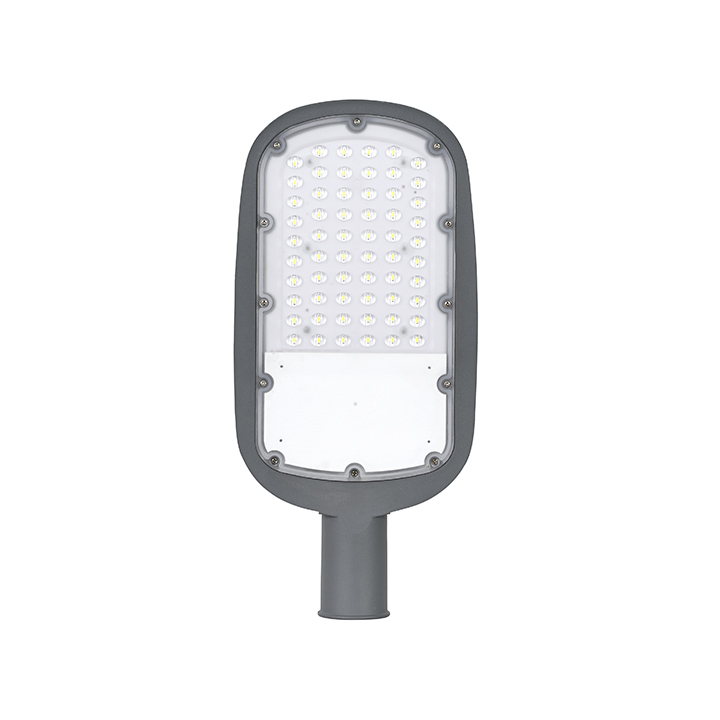
Why choose LED street lights?
The case for choosing LED street lights is straightforward and backed by data. LED technology reduces street lighting energy consumption by 50–75%, extends service life to 50,000–100,000 hours, and delivers better visibility than any conventional alternative. Whether you are a city planner, facility manager, or infrastructure developer, LED street lights offer a combination of performance, durability, and cost efficiency that legacy lighting simply cannot match.
Unmatched Energy Efficiency Cuts Electricity Bills Immediately
Street lighting typically accounts for 30–50% of a municipality's total electricity expenditure. Choosing LED is one of the fastest ways to reduce that figure. A 150W high-pressure sodium (HPS) fixture can be replaced by a 45–60W LED unit producing equivalent or superior illumination — a direct wattage reduction of 60–70% per pole.
This efficiency advantage compounds when smart dimming is added. LED systems support continuous dimming from 100% down to 10% output, allowing light levels to be reduced automatically during low-traffic hours without any degradation to lamp life — something HPS technology cannot do reliably.
- Standard LED retrofit: 50–65% energy saving versus HPS at the same lumen output.
- LED with adaptive dimming (midnight dimming schedule): up to 80% energy saving over a full operating year.
- For a network of 50,000 fixtures, this can represent annual savings of several million kilowatt-hours and a measurable reduction in carbon output.
Long Lifespan Means Far Fewer Replacements and Lower Maintenance Costs
Maintenance is one of the most underestimated costs in street lighting. Every lamp replacement requires a crew, a vehicle, traffic management in many cases, and the lamp itself. Over a 20-year period, a single HPS fixture may need replacing six to eight times. An LED fixture installed today may require just one replacement — or none at all.
| Technology | Rated Life (hours) | Years at 12 hrs/night | Lamp Changes over 20 yrs |
|---|---|---|---|
| High-Pressure Sodium | 15,000–24,000 | 3–5 | 4–7 |
| Metal Halide | 10,000–20,000 | 2–4 | 5–10 |
| LED | 50,000–100,000+ | 11–22+ | 0–2 |
For a city managing 100,000 street lights, switching to LED can eliminate hundreds of thousands of maintenance visits over two decades — translating directly into lower operating budgets and fewer road closures for lamp change-outs.
Better Light Quality Enhances Road Safety and Pedestrian Confidence
Choosing LED is not just a financial decision — it is a safety decision. The quality of light produced by LEDs is measurably superior to HPS in ways that directly affect how well people see at night.
Higher Color Rendering for Accurate Visual Perception
HPS lamps have a Color Rendering Index (CRI) of just 20–25, producing the familiar orange-yellow glow that distorts colors and reduces contrast. LED street lights typically offer CRI values of 70 to 90+, allowing drivers to accurately read road markings, identify pedestrians wearing dark clothing, and recognize hazards at greater distances.
Uniform Illumination Reduces Dark Spots
LEDs emit light directionally, and modern optical housings can shape the beam precisely to match road geometry. This produces a more uniform illuminance distribution — fewer bright pools directly under the pole and fewer dark zones between poles — which is a key factor in road safety standards such as EN 13201 in Europe and ANSI/IES RP-8 in North America.
Instant Full Brightness With No Warm-Up Delay
HPS and metal halide lamps require 3–5 minutes to reach full output after switch-on. LEDs reach 100% brightness instantly — a critical advantage for motion-triggered lighting, emergency scenarios, or any situation where lights are cycled off and on.
Smart Control Compatibility Unlocks Additional Savings and Management Efficiency
One of the most compelling reasons to choose LED street lights today is their native compatibility with intelligent control systems. Unlike HPS, LED fixtures can be dimmed smoothly and switched rapidly without any damage to the lamp — making them ideal for integration with centralized lighting management platforms.
Connected LED street lighting systems can deliver:
- Real-time fault detection — operators receive automatic alerts when a fixture fails, eliminating manual inspection routes.
- Scheduled and demand-responsive dimming — lights dim automatically after midnight or brighten when motion is detected, balancing safety and efficiency.
- Energy metering per fixture — granular consumption data enables accurate reporting and performance verification.
- Predictive maintenance scheduling — performance trends identify fixtures nearing end of life before they fail in service.
Cities operating smart LED networks have recorded combined energy and operational savings of 60–80% compared to unmanaged legacy systems — well above what LED efficiency alone achieves.
Environmental Benefits Support Sustainability Goals and Regulatory Compliance
Choosing LED street lights contributes directly to measurable environmental improvements — an increasingly important factor as governments and organizations commit to carbon reduction targets.
Lower Carbon Emissions
Street lighting is responsible for approximately 19% of global electricity used for lighting. A city that replaces 100,000 HPS fixtures with LEDs can reduce CO2 emissions by 10,000–20,000 metric tons per year, depending on the carbon intensity of the local grid. This directly supports national and municipal net-zero commitments.
Reduced Light Pollution
LED optics direct light downward onto the road surface rather than scattering it upward and sideways. This reduces sky glow in urban areas and limits spill light into adjacent properties — an important consideration in areas with residential neighbors or near protected natural habitats. Warmer-color LEDs (2700–3000K) are also available to minimize disruption to nocturnal wildlife and human sleep cycles.
Mercury-Free Construction
HPS and metal halide lamps contain mercury — a hazardous substance that requires special disposal procedures and creates environmental liability. LED fixtures contain no mercury, simplifying end-of-life handling and reducing the risk of environmental contamination from broken lamps in the field.
Durability and Reliability in Demanding Outdoor Environments
Street lights operate continuously in conditions that degrade conventional lamps quickly — heat, cold, moisture, vibration, and UV exposure. LED fixtures are engineered specifically for these demands:
- Cold weather advantage — LED efficiency actually improves at low temperatures, unlike HPS lamps which can fail to ignite in extreme cold.
- Vibration resistance — solid-state construction with no filaments, electrodes, or glass envelopes means LEDs tolerate mechanical shock from traffic vibration far better than discharge lamps.
- IP65/IP66 weather sealing — commercial LED road fixtures carry ingress protection ratings ensuring full dust-tightness and resistance to heavy rain jets.
- Thermal management — quality LED street lights incorporate aluminum heat sinks that dissipate heat efficiently, preventing the thermal degradation that shortens lamp life in poorly designed units.
How LED Street Lights Compare to Conventional Options
The following table provides a direct side-by-side comparison across the criteria that matter most when selecting street lighting technology:
| Criterion | HPS | Metal Halide | LED |
|---|---|---|---|
| Efficacy (lm/W) | 80–150 | 75–100 | 130–220 |
| Lifespan (hours) | 15,000–24,000 | 10,000–20,000 | 50,000–100,000+ |
| Color Rendering (CRI) | 20–25 | 60–80 | 70–90+ |
| Warm-Up Time | 3–5 min | 2–5 min | Instant |
| Smart Dimming | Not compatible | Limited | Fully compatible |
| Contains Mercury | Yes | Yes | No |
| Cold Weather Performance | Degrades | Degrades | Improves |
Common Applications Where LED Street Lights Deliver the Strongest Results
LED street lights are suitable across all outdoor road lighting applications, but the return is especially compelling in the following contexts:
- Urban arterial roads and intersections — high traffic volumes and the need for reliable, consistent illumination make LED performance critical for safety.
- Highways and expressways — long runs with wide pole spacing require high-efficacy fixtures to maintain illuminance standards economically.
- Residential streets — lower wattage LEDs in warmer color temperatures improve neighborhood ambiance while reducing light intrusion into homes.
- Industrial estates and logistics parks — 24-hour or shift-based operations demand lights that perform reliably without frequent servicing.
- Parking facilities and access roads — motion-responsive LED dimming maximizes energy savings in areas with intermittent use.
Across all these settings, the decision to choose LED street lights delivers on three levels simultaneously: lower operating costs, higher safety performance, and reduced environmental impact — a combination no other street lighting technology currently matches.
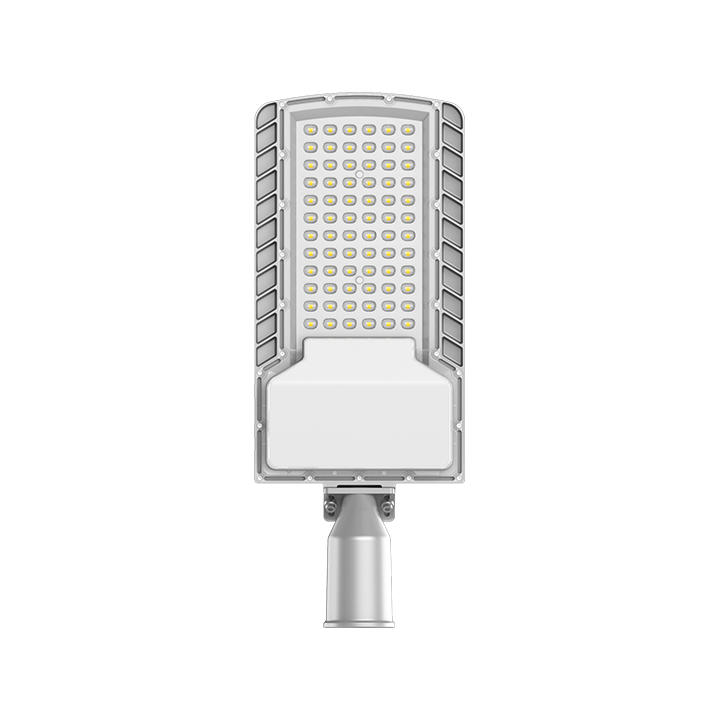
How do LED street lights differ from traditional street lights?
The difference between LED street lights and traditional street lights goes far beyond the type of bulb used. LEDs produce light through semiconductor electroluminescence, while traditional technologies such as high-pressure sodium (HPS) and metal halide rely on gas discharge inside sealed glass tubes. This fundamental difference in light generation drives every other distinction — from energy consumption and lifespan to light quality, maintenance requirements, and environmental impact. Understanding these differences helps explain why LED has become the global standard for new street lighting installations.
Different Light-Generation Technologies at the Core
The most fundamental difference between LED and traditional street lights lies in how they produce light.
How Traditional Street Lights Work
High-pressure sodium, metal halide, and low-pressure sodium lamps are all gas discharge technologies. An electric arc passes through a sealed tube containing gas and metallic salts, exciting the atoms inside and causing them to emit light. This process generates significant heat as a byproduct, requires a warm-up period of 3–5 minutes before reaching full brightness, and is sensitive to voltage fluctuations. The glass envelope and internal electrodes degrade over time, causing lumen depreciation well before the lamp physically fails.
How LED Street Lights Work
LEDs (Light Emitting Diodes) generate light through electroluminescence — electrons moving through a semiconductor material release energy in the form of photons. There is no arc, no gas, no glass envelope surrounding a discharge chamber, and no warm-up requirement. LEDs reach full brightness in milliseconds, produce far less waste heat per unit of light output, and degrade very gradually over tens of thousands of hours rather than failing abruptly.
Energy Efficiency: LED Uses Significantly Less Power for the Same Output
Energy efficiency is where the difference between LED and traditional street lights is most immediately measurable. Efficacy — the amount of visible light produced per watt of electricity consumed — is the standard metric.
| Technology | Typical Efficacy (lm/W) | Typical Wattage (road fixture) | Energy Saving vs HPS |
|---|---|---|---|
| High-Pressure Sodium (HPS) | 80–150 | 100–400W | Baseline |
| Metal Halide | 75–100 | 70–400W | −5% to +10% |
| Low-Pressure Sodium | 100–180 | 55–180W | 0% to −15% |
| LED | 130–220 | 30–200W | 50–75% |
A 150W HPS fixture can typically be replaced by a 45–60W LED unit delivering equivalent road surface illuminance. Across a large street lighting network, this difference accumulates into millions of kilowatt-hours and significant reductions in electricity expenditure every year.
Lifespan: LED Lasts Three to Five Times Longer Than Conventional Lamps
Traditional street lamps have finite, relatively short operational lives. HPS lamps are typically rated at 15,000–24,000 hours, while metal halide lamps often fall between 10,000 and 20,000 hours. Both technologies also suffer from significant lumen depreciation — losing 20–40% of their initial light output well before the lamp actually stops working, which means roads become progressively darker over the lamp's service cycle.
LED street lights operate on a fundamentally different failure model. Rather than burning out, LEDs degrade gradually. The industry standard measure — L70 — defines the point at which output has fallen to 70% of initial lumens. Quality LED road fixtures routinely achieve L70 ratings of 50,000 to 100,000 hours, with some products rated beyond 150,000 hours. At 12 operating hours per night, a 70,000-hour LED fixture would remain within specification for over 15 years without replacement.
This extended lifespan directly reduces the number of maintenance interventions required, cutting labor costs, vehicle deployments, and road closures associated with lamp change-outs.
Light Quality: Color Rendering, Uniformity, and Spectral Output
The quality of light produced by LEDs differs substantially from traditional sources in ways that affect both safety and visual comfort.
Color Rendering Index (CRI)
HPS lamps produce a narrow-spectrum yellow-orange light with a CRI of just 20–25. Under HPS lighting, colors appear monochromatic, making it difficult to distinguish clothing colors, read road markings accurately, or identify hazards at a distance. LED street lights deliver a CRI of 70–90+, producing white light across a broad spectrum that renders colors far more accurately — improving driver perception and pedestrian visibility.
Light Distribution and Directionality
Traditional lamps emit light in all directions, including upward and sideways. Luminaire housings use reflectors to redirect this light downward, but significant losses occur in the process. LEDs emit light directionally from the outset, and precision optics can shape the beam pattern to match the exact geometry of a road or pathway. This means more usable light reaches the road surface per watt consumed, with less wasted as sky glow or spill into neighboring properties.
Correlated Color Temperature (CCT) Flexibility
Traditional HPS lamps are fixed at approximately 2000K — a deep amber tone. LED street lights are available across a wide range of color temperatures, from warm 2700K suitable for residential areas where light intrusion is a concern, to neutral 4000K or cool 5700K preferred for highways and high-security areas where maximum visual acuity is required.
Startup Behavior: Instant-On vs. Warm-Up Delay
Traditional gas discharge lamps require a warm-up period after being switched on. HPS lamps take 3–5 minutes to reach full output; metal halide lamps may take 2–5 minutes. If power is interrupted and then restored, a re-strike delay of up to 15–20 minutes may occur while the lamp cools sufficiently to restart — leaving streets dark during that interval.
LED street lights have no warm-up period and no re-strike delay. They reach full brightness in milliseconds and can be switched on and off repeatedly without any damage or performance penalty. This makes them ideal for motion-triggered applications, emergency lighting scenarios, or any network where rapid response to changing conditions is required.
Dimming and Smart Control Capability
One of the most significant practical differences between LED and traditional street lights is compatibility with intelligent control systems.
HPS lamps cannot be dimmed smoothly — they operate best at or near full power, and attempting to dim them causes color shift, instability, and accelerated lamp degradation. Metal halide lamps offer limited dimming capability but with similar drawbacks. Neither technology is well suited to the kind of dynamic, demand-responsive lighting management that modern smart city infrastructure requires.
LED fixtures support continuous, smooth dimming from 100% down to 10% output or lower without any impact on lamp life or light quality. This enables:
- Scheduled midnight dimming — automatically reducing output during low-traffic hours, adding 15–30% in additional energy savings on top of the baseline efficiency gain.
- Motion-adaptive lighting — brightening when pedestrians or vehicles are detected and dimming again when the area is clear.
- Centralized network management — operators can monitor, adjust, and diagnose every fixture remotely through a connected management platform.
- Predictive maintenance — performance data logged over time identifies fixtures approaching end of life before failure occurs.
Environmental and Safety Differences
Traditional street lighting technologies carry environmental and safety liabilities that LED does not.
Mercury Content
HPS, metal halide, and fluorescent lamps all contain mercury — a hazardous substance regulated under environmental law in most jurisdictions. Broken lamps in the field create contamination risk, and end-of-life disposal requires special handling. LED fixtures contain no mercury, eliminating this risk entirely and simplifying disposal compliance.
Carbon Emissions
Because LEDs consume 50–75% less electricity than equivalent HPS installations, they produce proportionally fewer carbon emissions from electricity generation. A city replacing 100,000 HPS fixtures with LEDs can reduce annual CO2 output by an estimated 10,000–20,000 metric tons, depending on the local grid's carbon intensity.
Light Pollution
The directional nature of LED light output and the precision of modern optical systems means far less light is scattered upward or sideways compared to omnidirectional discharge lamps. This results in lower sky glow and reduced light trespass onto adjacent properties — a meaningful difference for urban residents and protected ecological areas alike.
Physical Construction and Weather Resilience
The solid-state construction of LED fixtures gives them a distinct physical advantage over traditional lamp-based luminaires in outdoor environments.
- No fragile glass envelope — LEDs are far more resistant to mechanical shock and vibration from traffic than HPS or metal halide lamps, which can fail prematurely when exposed to repeated road vibration.
- Cold weather performance — gas discharge lamps struggle to ignite and lose efficiency in low temperatures. LEDs perform reliably down to −40°C and their efficacy actually increases slightly in cold conditions.
- IP65/IP66 sealing — commercial LED road fixtures are designed with full dust and water ingress protection, ensuring consistent performance in rain, humidity, and coastal salt-air environments.
- Integrated thermal management — LED housings incorporate aluminum heat sinks that dissipate junction heat efficiently, preventing the thermal degradation that reduces lamp life in poorly designed units.
Side-by-Side Summary of Key Differences
The table below condenses the most important differences between LED street lights and traditional HPS — the most widely deployed conventional technology — across the criteria that matter most for infrastructure decision-making:
| Characteristic | Traditional HPS | LED |
|---|---|---|
| Light source principle | Gas discharge arc | Semiconductor electroluminescence |
| Efficacy (lm/W) | 80–150 | 130–220 |
| Rated lifespan (hours) | 15,000–24,000 | 50,000–100,000+ |
| Color Rendering Index (CRI) | 20–25 | 70–90+ |
| Warm-up time | 3–5 minutes | Instant (milliseconds) |
| Re-strike delay after power loss | Up to 15–20 minutes | None |
| Smooth dimming capability | Not compatible | 100% to 10% or below |
| Mercury content | Yes | No |
| Cold weather performance | Degrades, may fail to ignite | Reliable to −40°C, efficacy improves |
| Light direction | Omnidirectional (requires reflectors) | Directional (precision optics) |
What These Differences Mean in Practice
The distinctions between LED and traditional street lights are not theoretical — they translate into concrete operational outcomes:
- A city operating 80,000 HPS fixtures and switching to LED can expect to reduce its annual street lighting electricity consumption by 50–70 million kWh — equivalent to removing thousands of homes from the grid.
- Maintenance teams that previously scheduled lamp replacements every 3–4 years under HPS can extend service intervals to 12–15 years or more under LED.
- Roads lit with LED are consistently rated higher for perceived safety and visibility in pedestrian surveys, due to the improved color rendering and more uniform light distribution.
- Smart LED networks give infrastructure managers real-time visibility of their entire lighting estate — something impossible with passive HPS systems.
Taken together, these differences explain why LED has displaced traditional street lighting technologies across new installations globally and why large-scale retrofits continue to accelerate in existing networks.
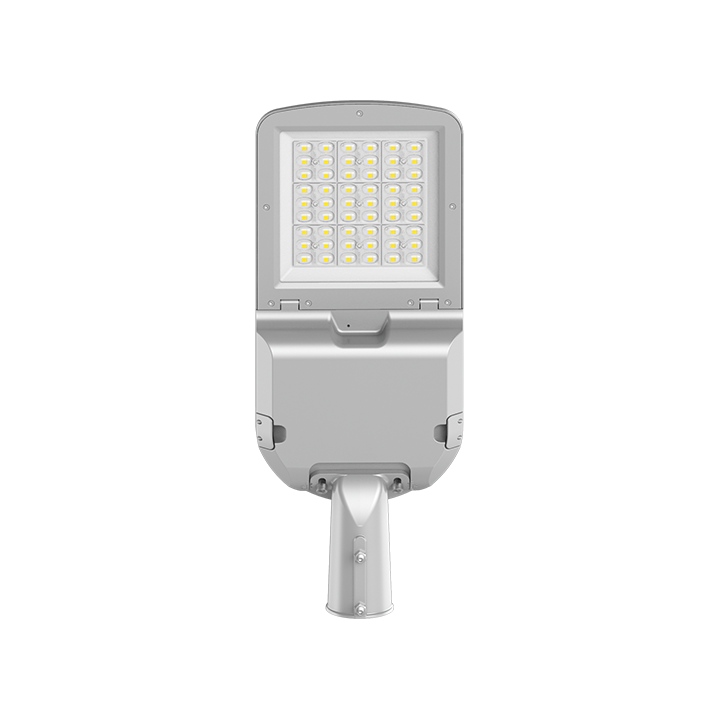
What is the lifespan of an LED street light?
The lifespan of an LED street light is 50,000 to 100,000 hours under standard operating conditions, with some high-quality commercial fixtures rated beyond 150,000 hours. At a typical operating schedule of 12 hours per night, a 70,000-hour LED street light would remain within its rated performance specification for over 15 years without requiring lamp replacement. This is three to five times longer than high-pressure sodium (HPS) or metal halide lamps, which are rated at 15,000–24,000 hours and 10,000–20,000 hours respectively.
How LED Lifespan Is Measured: Understanding L70 and Lumen Maintenance
LED lifespan is defined differently from traditional lamp lifespan. Conventional lamps typically have a rated life based on when 50% of a batch of test lamps have failed — a sudden, binary failure point. LEDs rarely fail abruptly. Instead, they degrade gradually, producing progressively less light over time.
The industry standard metric for LED lifespan is lumen maintenance, expressed as Lx By:
- L refers to the percentage of initial lumen output retained — for example, L70 means the fixture still produces 70% of its original lumens.
- B refers to the percentage of fixtures in a batch that still meet that threshold — B50 means 50% of units remain above the lumen level; B10 means 90% do.
- A rating of L70B50 at 70,000 hours means that after 70,000 hours, at least 50% of fixtures still produce 70% or more of their original light output.
Most road lighting standards use L70 as the threshold for acceptable lumen depreciation. Quality LED street lights are typically rated at L70B50 at 50,000–100,000 hours, though premium products achieve L80 or better at the same intervals — meaning they retain 80% output far longer.
LED Lifespan Compared to Traditional Street Lighting Technologies
The lifespan advantage of LED street lights over conventional alternatives is substantial across every technology type. The table below illustrates how different street lighting technologies compare when operating 12 hours per night:
| Technology | Rated Lifespan (hours) | Years at 12 hrs/night | Replacements over 25 years |
|---|---|---|---|
| Low-Pressure Sodium | 14,000–18,000 | 3–4 | 6–8 |
| Metal Halide | 10,000–20,000 | 2–4 | 6–12 |
| High-Pressure Sodium (HPS) | 15,000–24,000 | 3–5 | 5–8 |
| LED (standard) | 50,000–70,000 | 11–16 | 1–2 |
| LED (premium) | 80,000–150,000+ | 18–34+ | 0–1 |
For a network of 50,000 street lights, switching from HPS to LED can eliminate 250,000 or more lamp replacements over a 25-year period — a major reduction in labor, vehicle, and material costs.
Key Factors That Affect How Long an LED Street Light Actually Lasts
While rated lifespan provides a useful benchmark, the actual service life of an LED street light in the field depends on several variables. Understanding these helps explain why some installations significantly exceed their rated hours while others fall short.
Thermal Management Quality
Heat is the primary enemy of LED longevity. LED junction temperature — the temperature at the semiconductor itself — directly governs the rate of lumen depreciation. A well-engineered LED street light uses an aluminum die-cast housing that acts as a passive heat sink, drawing heat away from the LED module efficiently. Every 10°C increase in junction temperature can approximately halve LED lifespan, making thermal design one of the most critical quality indicators in any street light fixture.
Driver and Electronics Quality
The LED driver — the electronic component that regulates current to the LED module — is often the first component to fail in a street light system. A high-quality driver rated for 100,000 hours or with a mean time between failures (MTBF) exceeding 300,000 hours will outlast budget alternatives by a wide margin. Driver failure does not mean the LED module is worn out; it means the whole fixture goes dark prematurely.
Ambient Temperature and Climate
LED street lights are typically rated at an ambient temperature of 25°C or 35°C. In regions where average nighttime temperatures regularly exceed 35°C — such as the Middle East or tropical climates — thermal stress on the fixture is higher, and actual lifespan may be shorter than the rated specification unless the fixture has been designed and tested for those conditions. Conversely, in cooler climates, LEDs typically perform at or above their rated lifespan.
Operating Hours Per Day
Rated lifespan is expressed in total cumulative hours. The more hours per day a fixture operates, the faster those hours accumulate. A street light running 10 hours per night will reach 70,000 hours in approximately 19 years; one running 14 hours per night in regions with long winter nights will reach the same point in just under 14 years.
Surge Protection and Power Quality
Voltage spikes from lightning, grid switching events, or inductive loads can permanently damage LED drivers and modules. Street lights installed without adequate surge protection devices (SPDs) — typically rated at 10kV or 20kV for road applications — are at significant risk of premature failure in areas prone to electrical storms or unstable grid supply.
Ingress Protection and Sealing Integrity
Moisture and dust ingress accelerates corrosion of internal electronics and degrades optical components over time. Commercial LED road fixtures rated at IP65 or IP66 provide protection against dust and high-pressure water jets. Fixtures that lose their seal due to poor gasket quality or physical damage will degrade faster, particularly in coastal or high-humidity environments.
How Lifespan Translates Into Real Maintenance Savings
The extended lifespan of LED street lights has direct, quantifiable consequences for maintenance budgets and operations. Consider a practical comparison for a network of 10,000 street lights operating 12 hours per night:
| Scenario | Lamp Life (hours) | Replacement Interval (years) | Total Replacements over 20 yrs (10,000 fixtures) |
|---|---|---|---|
| HPS (traditional) | 20,000 | ~4.6 | ~40,000–50,000 |
| LED (standard, 60,000 hrs) | 60,000 | ~13.7 | ~10,000–15,000 |
| LED (premium, 100,000 hrs) | 100,000 | ~22.8 | 0 (within 20 yr period) |
Each avoided replacement translates to savings on lamp materials, technician labor, vehicle deployment, and in many cases traffic management costs. Across large networks, these avoided interventions represent one of the most significant financial benefits of switching to LED.
The Role of Lumen Depreciation: Why Brightness Matters Beyond Lamp Life
Lifespan rating alone does not tell the complete story of how a street light performs over time. Lumen depreciation — the gradual reduction in light output — affects road illuminance standards compliance and safety long before a lamp technically "fails."
HPS lamps lose light output relatively quickly. A typical HPS lamp may retain only 70–75% of initial lumens after 8,000 hours — roughly three years into service at 12 hours per night. By the time the lamp is due for replacement, the road below it may already be significantly underlit relative to the original design specification.
Quality LED street lights, by contrast, are specifically engineered for slow, controlled depreciation. Many commercial road LEDs retain 90% or more of initial lumens after 30,000 hours and do not drop below the L70 threshold until well past 70,000 hours. This means roads stay properly illuminated for longer without requiring interim maintenance.
Some LED systems incorporate an initial lumen output buffer — the fixture is calibrated to start slightly below maximum output, with the driver gradually increasing current over time to compensate for natural depreciation and maintain consistent road illuminance throughout the product's service life.
How to Extend LED Street Light Lifespan in the Field
Even the best-rated LED street light will underperform its specification if installed or operated incorrectly. The following practical measures help ensure maximum service life:
- Select fixtures rated for local ambient temperatures — ensure the fixture's Ta (ambient temperature) rating matches or exceeds the maximum expected nighttime temperature in the installation region.
- Install surge protection devices — fit each fixture or circuit with an appropriately rated SPD to guard against voltage transients from lightning or grid switching.
- Verify IP rating integrity during installation — damaged gaskets or improperly tightened cable glands can compromise the weather seal and allow moisture ingress.
- Use dimming schedules — operating fixtures at reduced output (e.g., 70% during off-peak hours) lowers junction temperature and extends LED lifespan measurably.
- Clean optical surfaces periodically — accumulated dust and grime on lenses can reduce effective light output by 10–20% over several years, leading to unnecessary maintenance or early replacement decisions based on perceived lumen loss.
- Monitor via a connected control system — networked LED management platforms can track individual fixture performance over time, flagging early degradation patterns before they result in dark or underlit sections of road.
What to Look for in Lifespan Specifications When Selecting LED Street Lights
Not all lifespan claims are equivalent. When evaluating LED street lights for procurement, the following specification details should be checked:
- Lumen maintenance rating format — look for L70B50 or better (preferably L80B10), not just an hours figure without context.
- Test standard referenced — lifespan data should be based on recognized test methods such as IES LM-80 (for LED packages) and IES TM-21 (for projected lifespan extrapolation).
- Driver lifespan rating — the driver's rated hours (or MTBF) should match or exceed the LED module's rated lifespan to avoid premature electrical failure.
- Ambient temperature rating (Ta) — confirm the Ta rating covers the maximum installation environment temperature, not just a standard laboratory condition.
- Warranty coverage — reputable manufacturers back their lifespan claims with 5- to 10-year product warranties, providing a practical commitment that the stated lifespan is achievable in real-world conditions.
By verifying these details, procurement teams can make meaningful comparisons between products and avoid selecting fixtures whose headline lifespan figures do not hold up under scrutiny.
How do I choose the right LED street lights?
Selecting the right LED street light is not simply a matter of picking the highest wattage or the lowest-cost option. The correct choice depends on road classification, pole spacing, mounting height, required illuminance levels, environmental conditions, and control system compatibility. Getting these parameters right ensures the installation meets safety standards, performs reliably over its service life, and delivers the expected energy and maintenance savings. This guide walks through each decision point in a practical, structured way.
Step One: Define Your Road Class and Required Illuminance Level
The starting point for any LED street light selection is the road classification. International and national lighting standards — such as EN 13201 in Europe, ANSI/IES RP-8 in North America, and CIE 115 globally — define minimum average illuminance (lux) and uniformity requirements based on traffic volume, speed, and pedestrian usage.
| Road / Application Type | Typical Illuminance Class (EN 13201) | Minimum Average Illuminance | Minimum Uniformity (Uo) |
|---|---|---|---|
| High-speed motorway / dual carriageway | ME1 / ME2 | 2.0 cd/m² | 0.40 |
| Urban main road / distributor | ME3a / ME3b | 1.0 cd/m² | 0.40 |
| Residential collector road | ME5 / CE2 | 0.5 cd/m² / 10 lux | 0.35 |
| Pedestrian area / shared zone | P2 / P3 | 7.5–10 lux | 0.25–0.40 |
| Cycle path / footway | P4 / P5 | 3–5 lux | 0.25 |
Identifying the correct lighting class for your application before selecting any fixture prevents both under-lighting (a safety risk) and over-lighting (energy waste and increased light pollution).
Step Two: Determine Wattage Based on Mounting Height and Pole Spacing
Wattage selection cannot be made in isolation — it depends on the geometry of the installation. The key variables are mounting height, pole spacing, road width, and the fixture's photometric distribution. A high-efficacy LED luminaire (130–200 lm/W) at a given wattage will deliver very different results depending on these site parameters.
As a general reference, the following wattage ranges apply to typical single-sided or staggered road lighting arrangements:
| Application | Mounting Height | Typical Pole Spacing | Suggested LED Wattage |
|---|---|---|---|
| Narrow residential lane | 5–6 m | 20–30 m | 30–50W |
| Residential / local road | 6–8 m | 25–35 m | 50–80W |
| Urban arterial road | 8–10 m | 30–40 m | 80–120W |
| Highway / dual carriageway | 10–12 m | 35–50 m | 120–200W |
These figures are indicative only. For any formal installation, a photometric simulation using the fixture's IES or LDT photometric file should be run in lighting design software (such as DIALux or Relux) to confirm that illuminance and uniformity targets are met before procurement.
Step Three: Select the Right Optical Distribution for Your Road Geometry
Wattage and lumen output are only part of the picture. The beam distribution — how the light is shaped and directed — determines whether the lumens actually land on the road surface effectively.
Type II and Type III Distributions
For standard road lighting, Type II (medium lateral spread) and Type III (wide lateral spread) distributions are most commonly used. Type II suits narrower roads and side-mounted applications; Type III is better suited to wider roads where light needs to spread further from the pole.
Asymmetric and Symmetric Optics
Most road LED fixtures use asymmetric optics that project more light forward along the road and less backward, reducing wasted light behind the pole. Symmetric distributions are better suited to parking areas, pedestrian plazas, or applications where coverage in all directions is needed. Always check that the fixture's optic type matches your installation geometry.
Glare Control and ULR Rating
Upward Light Ratio (ULR) — the percentage of total light output directed above the horizontal — should be as low as possible for road applications to minimize sky glow and comply with dark-sky regulations. Quality LED road fixtures achieve ULR values below 1%. Glare control is equally important: fixtures used near residential properties or on roads where drivers face oncoming fixtures should carry a low glare rating (G class) per EN 13201.
Step Four: Choose the Correct Color Temperature for the Environment
LED street lights are available in a range of Correlated Color Temperatures (CCT), each suited to different environments. Choosing incorrectly can cause complaints from residents, harm nocturnal wildlife, or fail to meet local authority requirements.
- 2700K – 3000K (warm white): Recommended for residential streets, parks, and heritage areas where warm-tone lighting is preferred and light intrusion into homes must be minimized. Also reduces impact on nocturnal insects and wildlife.
- 3000K – 4000K (neutral white): A versatile choice for urban arterial roads and commercial areas. Offers good color rendering (CRI 70+) and strong visual acuity without the harshness of cooler tones.
- 4000K – 5700K (cool white): Used on highways, logistics parks, security-critical areas, and industrial zones where maximum visibility and contrast are the priority. Higher blue content makes it less suitable near residential areas.
Many municipalities have adopted policies limiting street lighting to 3000K or below in residential zones, following guidance from bodies such as the American Medical Association and the International Dark-Sky Association. Always verify local authority requirements before specifying CCT.
Step Five: Verify Key Technical Specifications Before Purchasing
Beyond wattage and CCT, several technical specifications determine whether an LED street light will perform reliably over its intended service life. The following parameters should be confirmed for any fixture under consideration:
Efficacy (lm/W)
System efficacy — measured at the fixture level, not just the LED chip — should be a minimum of 130 lm/W for a standard commercial street light and ideally 150 lm/W or above for energy-efficient procurement. Higher efficacy means fewer watts are needed to meet the same illuminance target.
Lifespan and Lumen Maintenance Rating
Look for an L70B50 rating at a minimum of 50,000 hours, verified by IES LM-80 and TM-21 test data. Fixtures rated at L80B10 at 50,000 hours offer better long-term lumen maintenance and are preferable for installations where maintenance access is difficult or costly.
Ingress Protection (IP Rating)
All road-mounted LED fixtures should carry a minimum IP65 rating (dust-tight, protected against water jets). Coastal, high-humidity, or marine environments should use IP66 or higher, and stainless steel hardware should be specified where salt corrosion is a risk.
Impact Resistance (IK Rating)
In locations where vandalism or accidental physical impact is possible — urban areas, car parks, underpasses — specify fixtures rated at IK08 or IK10, which resist impacts of 5J and 20J respectively.
Surge Protection Level
Built-in surge protection devices (SPDs) should be rated at a minimum of 10kV for standard road applications, and 20kV in areas with high lightning activity or unstable grid supply. This protects both the LED module and the driver from voltage transients that cause premature failure.
Power Factor and THD
A power factor (PF) of 0.95 or above and total harmonic distortion (THD) below 15% are standard expectations for quality LED street light drivers. Poor PF and high THD place unnecessary load on distribution networks and may cause problems on sensitive grid infrastructure.
Ambient Temperature Rating (Ta)
Confirm that the fixture's maximum ambient temperature rating covers the installation environment. Standard fixtures are rated to Ta 40°C or Ta 50°C; installations in tropical regions or enclosed structures may require higher-rated products to prevent thermal derating that shortens service life.
Step Six: Decide Whether Smart Controls Are Required
LED street lights are uniquely compatible with intelligent dimming and network management systems. For larger installations, integrating smart controls can deliver an additional 15–35% in energy savings on top of the baseline LED efficiency gain — and provides real-time visibility of fixture performance across the entire network.
When evaluating smart control compatibility, consider:
- 0–10V or DALI dimming interface — confirm the driver supports the dimming protocol used by your control system. DALI (Digital Addressable Lighting Interface) offers individual fixture addressability; 0–10V is simpler and lower-cost for group dimming.
- Integrated wireless node vs. external controller — some fixtures include a built-in NB-IoT, Zigbee, or LoRa communication node; others require a separate controller to be fitted in the fixture's driver compartment.
- NEMA or Zhaga socket compatibility — if you plan to add or upgrade control nodes in future, specifying fixtures with a NEMA 5-pin or Zhaga Book 18 interface socket avoids the need for complete fixture replacement when upgrading the control system.
- Central management platform — ensure the control hardware is compatible with the software platform you intend to use for scheduling, monitoring, and reporting.
Step Seven: Check Certifications and Compliance
Certifications confirm that a product has been independently tested and meets the standards it claims. For LED street lights, the following certifications are most relevant:
- CE marking (Europe) — confirms compliance with EU directives including electromagnetic compatibility (EMC) and low voltage requirements.
- ENEC or CB certification — independent third-party safety certification widely recognized across European and international markets.
- DLC (DesignLights Consortium) listing (North America) — required for energy rebate programs and confirms minimum efficacy and performance thresholds.
- IES LM-79 and LM-80 test reports — LM-79 covers fixture-level photometric performance; LM-80 covers LED package lumen maintenance. Both should be available from any reputable supplier.
- ROHS compliance — confirms the fixture is free from restricted hazardous substances, including lead and mercury.
Quick-Reference Checklist for LED Street Light Selection
Use the following checklist as a practical summary when evaluating LED street light options for your project:
- Identify the applicable road lighting standard and determine the required illuminance class (e.g., ME3, CE2, P3).
- Confirm mounting height, pole spacing, and road width — run a photometric simulation before finalizing wattage.
- Select an optical distribution (Type II, III, or asymmetric) that matches the road geometry.
- Specify the appropriate CCT for the environment (2700–3000K for residential; 4000K for arterial; 4000–5700K for industrial or highway).
- Verify system efficacy is at least 130 lm/W and lumen maintenance is rated at L70B50 at 50,000+ hours.
- Confirm IP65 minimum ingress protection, appropriate IK rating, and surge protection of at least 10kV.
- Check ambient temperature rating (Ta) against the installation environment.
- Decide on dimming protocol and smart control interface requirements (DALI, 0–10V, NEMA/Zhaga socket).
- Request IES LM-79, LM-80, and TM-21 test data and verify applicable certifications (CE, DLC, ENEC).
- Confirm the supplier offers a minimum 5-year product warranty covering both the LED module and driver.
Following this structured approach ensures that the LED street lights selected for your project are correctly specified for the application, compliant with relevant standards, and capable of delivering their rated performance and lifespan reliably in the field.
Previous Post
What are the advantages of Solar street lights?
Next Post
What is a galvanized light pole?
Related Products

If you are interested in our products, please consult us
CONTACT DETAILS
-
Guoji Lighting Industrial Park,Northern Suburb of Yangzhou City

-
+86-0514-84242668

-
[email protected]

PRODUCTS
QUICK LINK
QR CODE
Copyright © JIANGSU TIANHUANG LIGHTING GROUP CO.,LTD. All Rights Reserved.
China LED street light manufacturer Custom metal street light pole supplier