 Language
 English
 русский
 Español
 عربى
عربى
Industry News
What are the advantages of Solar street lights?
Content
- 1 Why Solar Street Lights Are Worth It: The Short Answer
- 1.1 No Electricity Bills: The Most Immediate Financial Benefit
- 1.2 Off-Grid Capability: Lighting Where the Grid Cannot Reach
- 1.3 Reduced Carbon Emissions and Environmental Impact
- 1.4 Low Maintenance Requirements Over a Long Lifespan
- 1.5 Faster and Simpler Installation
- 1.6 Smart Controls and Adaptive Lighting Features
- 1.7 Improved Safety and Reliability During Grid Outages
- 1.8 Scalability for Large-Scale Urban and Rural Rollouts
- 1.9 Comparing Solar vs. Conventional Street Lights: A Quick Overview
- 1.10 What to Keep in Mind Before Choosing Solar Street Lights
- 2 The Short Answer: How Solar Street Lights Work
- 2.1 The Four Core Components and What Each One Does
- 2.2 The Day-Night Operating Cycle: Step by Step
- 2.3 How the Photosensor Controls Automatic On/Off Switching
- 2.4 How Motion Sensors Extend Battery Life at Night
- 2.5 All-in-One vs. Split-Type Solar Street Lights
- 2.6 How the System Handles Cloudy Days and Low Solar Input
- 2.7 Smart Solar Street Lights: Remote Monitoring and IoT Integration
- 2.8 Key Performance Metrics to Understand When Evaluating a Solar Street Light
- 2.9 Why the System Works Without Any Grid Connection
- 3 The Core Difference: Power Source, Not Light Source
- 3.1 How Each System Is Powered
- 3.2 Installation: Off-Grid Simplicity vs. Grid Infrastructure Requirements
- 3.3 Operating Costs and Energy Expenses Over Time
- 3.4 Reliability: Grid Outages vs. Weather Dependence
- 3.5 Light Output and Illumination Performance
- 3.6 Environmental Impact: Carbon Footprint Comparison
- 3.7 Maintenance Requirements for Each System
- 3.8 Side-by-Side Comparison: Solar Street Lights vs. Grid LED Street Lights
- 3.9 Which Is Better for Remote or Developing Area Applications?
- 3.10 Which Is Better for High-Density Urban Infrastructure?
- 4 The Direct Answer: How Long a Solar Street Light Lasts
- 4.1 Lifespan of Each Component Explained
- 4.2 Component Lifespan at a Glance
- 4.3 What Shortens a Solar Street Light's Lifespan
- 4.4 How to Maximize the Lifespan of a Solar Street Light
- 4.5 How Battery Chemistry Choice Affects Total System Lifespan
- 4.6 Signs That a Solar Street Light Component Is Nearing End of Life
- 5 Start Here: The Most Important Factors in Choosing a Solar Street Light
- 5.1 Step One: Assess Your Local Solar Resource
- 5.2 Step Two: Determine the Required Lumen Output for Your Application
- 5.3 Step Three: Choose the Right Battery Type and Capacity
- 5.4 Step Four: Verify Solar Panel Wattage and Quality
- 5.5 Step Five: Evaluate the Charge Controller — MPPT Is the Standard to Insist On
- 5.6 Step Six: Check the LED Quality — Lumens, Efficacy, CRI, and CCT
- 5.7 Step Seven: Confirm IP Rating and Structural Durability for Your Environment
- 5.8 Smart Features Worth Paying For — and Which to Skip
- 5.9 Key Certifications and Quality Marks to Look For
- 5.10 All-in-One vs. Split-Type: Which Configuration to Choose
- 5.11 A Practical Checklist Before Finalizing Your Selection
Why Solar Street Lights Are Worth It: The Short Answer
Solar street lights offer a compelling combination of zero electricity costs, easy off-grid installation, and long-term sustainability. Once installed, they generate their own power from sunlight, require minimal maintenance, and can reduce public lighting energy expenses by up to 60–70% compared to conventional grid-powered alternatives. For municipalities, commercial properties, and remote communities alike, the advantages are both financial and environmental.
No Electricity Bills: The Most Immediate Financial Benefit
One of the most direct advantages of solar street lights is the complete elimination of grid electricity consumption for outdoor lighting. Since the lights are powered entirely by photovoltaic panels, there are no monthly utility charges associated with their operation.
Consider a city with 10,000 street lights running an average of 11 hours per night. At a typical energy rate, switching to solar can save hundreds of thousands of dollars annually. Smaller towns and rural counties often report full return on investment within 3 to 5 years, after which the lights operate essentially for free.
- No wiring to utility poles required
- No exposure to electricity price fluctuations
- Operating cost after installation is effectively zero for energy
Off-Grid Capability: Lighting Where the Grid Cannot Reach
Solar street lights are entirely self-contained systems. They do not rely on an external power grid, which makes them ideal for remote highways, rural roads, construction sites, nature trails, and developing regions where grid infrastructure is absent or unreliable.
In sub-Saharan Africa and parts of South and Southeast Asia, solar street lighting projects have brought reliable night-time illumination to communities for the first time. According to the International Energy Agency, over 770 million people still lack reliable electricity access — solar street lights represent a practical solution that bypasses the need for centralized grid expansion.
Reduced Carbon Emissions and Environmental Impact
Conventional street lighting powered by fossil-fuel-derived grid electricity contributes significantly to carbon emissions. Solar street lights produce zero operational carbon emissions, drawing exclusively on renewable solar energy.
A single solar street light replacing a 100W high-pressure sodium lamp can prevent approximately 0.4 to 0.6 tonnes of CO2 emissions per year, depending on the local grid's carbon intensity. Scaled across an entire city's infrastructure, this becomes a meaningful contribution to climate targets.
Additionally, modern LED-based solar street lights eliminate the use of mercury-containing bulbs (common in older fluorescent and metal-halide fixtures), reducing hazardous waste in the environment.
Low Maintenance Requirements Over a Long Lifespan
Solar street lights are engineered for durability and minimal intervention. The key components and their typical service life are summarized below:
| Component | Typical Lifespan | Maintenance Frequency |
|---|---|---|
| LED Light Source | 50,000+ hours (~11 years) | Rarely needs replacement |
| Solar Panel | 20–25 years | Periodic cleaning |
| Lithium Battery | 5–8 years | Replace once per cycle |
| Charge Controller | 10–15 years | Minimal |
With no underground cabling to corrode or junction boxes to maintain, service teams spend far less time on routine inspections compared to conventional street lighting networks.
Faster and Simpler Installation
Traditional street lighting installations require excavation for underground conduit, trenching for cables, and connection to the local power grid — a process that can take days per light point and involves coordination with utility providers. Solar street lights, by contrast, require only a foundation pole and anchoring hardware.
Key installation advantages:
- No trenching or underground cabling needed
- No electrical permit requirements for grid connection in most jurisdictions
- A two-person crew can typically install a unit in under two hours
- Lights can be relocated if road layouts change
This flexibility also means rapid deployment is possible for emergency lighting needs, temporary events, or disaster recovery scenarios.
Smart Controls and Adaptive Lighting Features
Modern solar street lights increasingly incorporate intelligent control systems that further optimize energy use and extend battery life. These features include:
- Motion-activated dimming: Lights operate at reduced brightness (e.g., 30%) during low-traffic periods and brighten to full power when pedestrians or vehicles are detected, conserving stored energy.
- Dusk-to-dawn automation: Built-in photosensors activate the light at sunset and switch it off at sunrise — no manual scheduling required.
- Remote monitoring: IoT-enabled units can report battery levels, fault alerts, and usage data to a central dashboard, enabling proactive maintenance.
- Adaptive brightness scheduling: Brightness can be programmed by time of night, reducing output during late-night hours when foot traffic is minimal.
These smart features can reduce energy consumption by an additional 20–40% compared to fixed-output solar street lights, further extending battery autonomy during cloudy periods.
Improved Safety and Reliability During Grid Outages
Grid-powered street lights go dark during power outages, which can create serious safety hazards on roads and in public spaces. Solar street lights, operating independently of the grid, continue functioning normally even during extended blackouts.
Quality solar street lights are typically designed to provide 3 to 5 consecutive nights of backup lighting without any solar charge, meaning they remain operational through short periods of overcast weather or grid emergencies. For critical infrastructure such as hospital access roads, emergency evacuation routes, and police stations, this reliability advantage is significant.
Scalability for Large-Scale Urban and Rural Rollouts
Because each solar street light is an independent unit, large deployments can be staged incrementally without needing to expand grid capacity first. Cities can install lights block by block, neighborhood by neighborhood, without requiring major upfront infrastructure investment.
This modularity is particularly valuable for fast-growing urban areas in developing economies, where grid expansion struggles to keep pace with population growth. Solar lighting programs have been deployed at scale across India, Nigeria, Kenya, and Bangladesh, illuminating millions of previously unlit road kilometers at a fraction of the cost of grid extension.
Comparing Solar vs. Conventional Street Lights: A Quick Overview
| Factor | Solar Street Lights | Conventional Street Lights |
|---|---|---|
| Energy Source | Sunlight (free) | Grid electricity (billed) |
| Installation Complexity | Low (no trenching) | High (cable, conduit, permits) |
| Operating Cost | Near zero | Ongoing electricity bills |
| Outage Resilience | Fully independent | Fails during blackouts |
| Carbon Emissions (operation) | Zero | Dependent on grid mix |
| Remote Area Suitability | Excellent | Limited by grid reach |
What to Keep in Mind Before Choosing Solar Street Lights
While the advantages are substantial, solar street lights perform best in regions with adequate solar irradiance — generally areas receiving more than 4 peak sun hours per day. In high-latitude locations with long winters and extended cloudy seasons, system sizing must account for reduced generation periods, which may increase upfront hardware costs.
Battery replacement every 5–8 years is the primary recurring cost. Choosing lithium iron phosphate (LiFePO4) batteries over older lead-acid types offers a longer service life and better performance in cold climates, though at a higher initial investment.
Proper site assessment — including shading analysis, installation angle, and local weather patterns — ensures the system is correctly sized and delivers the expected performance over its full operational life.
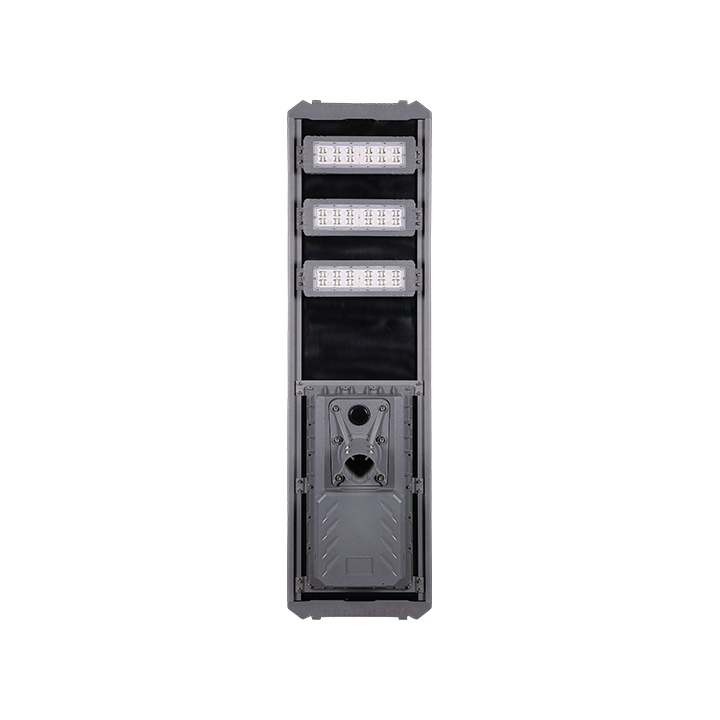
The Short Answer: How Solar Street Lights Work
Solar street lights work by converting sunlight into electricity through a photovoltaic (PV) panel, storing that energy in a rechargeable battery during the day, and using it to power an LED lamp automatically at night. The entire process is managed by a built-in charge controller, with no connection to the utility grid required. Every component — panel, battery, controller, and light — is integrated into a single self-sufficient unit that operates continuously on its own solar cycle.
The Four Core Components and What Each One Does
Understanding how solar street lights work starts with knowing the role of each component in the system. There are four essential parts:
1. Solar Panel (Photovoltaic Module)
The solar panel is the energy source of the entire system. It is typically mounted on top of or at an angle on the light pole to maximize sun exposure. When sunlight strikes the silicon cells in the panel, photons knock electrons loose, generating direct current (DC) electricity through the photovoltaic effect.
Most solar street lights use monocrystalline silicon panels, which offer conversion efficiencies of 17–22% — higher than polycrystalline alternatives — making them well-suited for space-constrained pole-top installations. A typical 40W panel on a street light can generate roughly 160–200 watt-hours (Wh) of energy on a clear day with 4–5 peak sun hours.
2. Rechargeable Battery
The battery stores the electricity generated by the solar panel during daylight hours and supplies it to the LED lamp throughout the night. Battery capacity is measured in watt-hours (Wh) and is sized to provide at least 3 to 5 nights of backup illumination without any solar charge, ensuring the light continues to operate during cloudy periods.
Two battery chemistries are commonly used in solar street lights:
- Lithium Iron Phosphate (LiFePO4): The preferred modern choice. Offers 2,000–3,000 charge cycles, stable performance in both heat and cold, and a compact form factor.
- Lead-Acid (VRLA/GEL): Lower upfront cost but heavier, with only 300–500 charge cycles and reduced cold-weather performance.
3. Charge Controller
The charge controller is the brain of the solar street light system. It regulates the flow of electricity between the solar panel, the battery, and the LED lamp. Its primary functions are to prevent the battery from overcharging during the day and over-discharging at night — both of which can permanently damage battery cells.
Modern controllers use MPPT (Maximum Power Point Tracking) technology, which continuously adjusts the electrical operating point of the panel to extract the maximum available power at any given light level. MPPT controllers are typically 15–30% more efficient than older PWM (Pulse Width Modulation) types, especially under partially cloudy or low-light conditions.
4. LED Lamp and Optical Housing
The LED lamp is the output device — the actual light source. LED technology is the standard choice for solar street lights because of its extremely low power consumption and long lifespan. A high-quality LED module can deliver 130–160 lumens per watt, compared to just 80–100 lm/W for conventional high-pressure sodium lamps.
The optical housing shapes and directs the light output using precision lenses or reflectors, ensuring light is distributed evenly across the road surface and minimizing light pollution above the horizontal plane.
The Day-Night Operating Cycle: Step by Step
A solar street light follows a continuous, automated cycle that requires no human intervention:
- Sunrise to sunset (charging phase): The solar panel converts sunlight into DC electricity. The charge controller regulates voltage and current, directing power into the battery. Charging typically begins as soon as irradiance exceeds approximately 200 W/m².
- At dusk (activation): As ambient light levels fall below a set threshold, the photosensor or light-dependent resistor (LDR) in the charge controller triggers the LED lamp to switch on automatically.
- Night operation (discharge phase): The LED draws power from the battery. Smart controllers may adjust brightness based on pre-set time schedules or motion sensor data to conserve energy during low-traffic hours.
- At dawn (shutdown): Rising light levels signal the controller to switch off the LED and resume charging mode, completing the cycle.
This fully automated cycle means zero operator input is needed on a night-to-night basis.
How the Photosensor Controls Automatic On/Off Switching
The photosensor (also called a light sensor or LDR) plays a critical role in automating the light's operation. It continuously monitors ambient light intensity and sends a signal to the charge controller based on preset thresholds:
- When light intensity drops below roughly 10–50 lux (corresponding to dusk), the controller receives a low-light signal and activates the LED.
- When intensity rises above that threshold again (dawn), the controller cuts power to the LED and returns to charging mode.
Some advanced systems use a real-time clock (RTC) module instead of or in addition to a photosensor, which allows the controller to switch based on pre-programmed sunrise and sunset times for a specific geographic location — providing more precise and consistent control across seasons.
How Motion Sensors Extend Battery Life at Night
Many solar street lights integrate passive infrared (PIR) or microwave motion sensors to enable adaptive brightness control. This is one of the most effective strategies for maximizing battery autonomy, particularly in low-traffic environments.
A typical motion-sensing operation mode works as follows:
- Default state: The LED runs at 30–40% brightness when no movement is detected.
- Triggered state: When a person or vehicle is detected within the sensor range (typically 5–12 meters), the lamp instantly brightens to 100% output.
- Return: After a configurable delay (usually 30–90 seconds), the light dims back to standby mode.
This adaptive approach can reduce nightly energy consumption by 30–50%, effectively extending battery backup from 3 nights to 5 or more under the same panel and battery configuration.
All-in-One vs. Split-Type Solar Street Lights
Solar street lights are available in two main structural configurations, each with a different approach to how the components are arranged:
| Feature | All-in-One | Split-Type |
|---|---|---|
| Component layout | Panel, battery, LED, controller in one housing | Panel separate from lamp head; battery may be in pole |
| Installation | Very fast; single unit mount | More complex; wiring between components |
| Panel orientation flexibility | Limited (fixed angle) | High (panel can be angled independently) |
| Battery capacity | Moderate (size-limited by housing) | Larger options available |
| Best suited for | Urban roads, parking lots, pathways | High-power applications, high-latitude regions |
All-in-one systems now dominate the market due to their simplicity. In these units, the lithium battery is embedded directly inside the lamp housing, and the solar panel folds out or sits flush on top, making installation as simple as mounting the unit to a pole and tightening a bracket.
How the System Handles Cloudy Days and Low Solar Input
A frequent concern about solar street lights is how they perform during overcast weather. The answer lies in system sizing and battery reserve strategy.
On a heavily overcast day, a solar panel may generate only 10–25% of its rated peak output. However, properly engineered systems account for this through:
- Oversized battery bank: Capacity is calculated for the worst-case consecutive cloudy days in the installation region, typically 3–5 days.
- MPPT optimization: The charge controller extracts maximum power even from weak or diffuse sunlight, harvesting energy from overcast skies that a fixed-voltage PWM controller would partially waste.
- Adaptive dimming: When battery state of charge drops below a set threshold (e.g., 30%), the controller can automatically reduce LED brightness to extend the remaining runtime.
In practice, a well-sized solar street light installed in a region with an annual average of 4+ peak sun hours per day will maintain reliable nightly operation throughout the year, including through short periods of poor weather.
Smart Solar Street Lights: Remote Monitoring and IoT Integration
Advanced solar street light systems go beyond basic automation. IoT-enabled models incorporate wireless communication modules (4G, NB-IoT, or Zigbee mesh) that allow each unit to report real-time data to a central management platform. Operators can monitor:
- Battery state of charge and voltage
- Daily solar energy generation (kWh)
- LED operating hours and current draw
- Fault alerts (e.g., panel disconnection, battery low, LED failure)
- Motion event logs and traffic pattern data
Remote brightness adjustment and scheduling can also be pushed to individual lights or groups from the cloud dashboard, allowing city managers to optimize energy use across an entire network without dispatching a maintenance team. Cities managing tens of thousands of solar street lights can thereby reduce operational overhead substantially while maintaining high service levels.
Key Performance Metrics to Understand When Evaluating a Solar Street Light
When assessing whether a solar street light system will perform as expected, these are the most important technical parameters to examine:
| Parameter | What It Measures | Typical Range |
|---|---|---|
| Solar Panel Wattage (W) | Maximum power output under standard conditions | 20W – 200W |
| Battery Capacity (Wh) | Total stored energy available | 50Wh – 1,000Wh+ |
| LED Luminous Efficacy (lm/W) | Light output per watt consumed | 120 – 160 lm/W |
| Backup Days | Consecutive nights operable without solar charge | 3 – 7 nights |
| IP Rating | Ingress protection against dust and water | IP65 – IP68 |
| Color Rendering Index (CRI) | How accurately colors appear under the light | 70 – 90+ |
Why the System Works Without Any Grid Connection
The reason solar street lights can operate entirely off-grid comes down to the balance between daily energy generation and nightly consumption. A correctly sized system is designed so that the solar panel generates at least as much energy during one average sunny day as the LED consumes in one full night.
For example, a 30W LED running for 10 hours consumes 300Wh. A 60W panel in a location with 5 peak sun hours generates approximately 300Wh per day — achieving exact energy balance. The battery buffer absorbs the mismatch between day-to-day solar variability and consistent nightly demand, acting as the bridge that makes autonomous operation possible across all weather conditions.
This self-contained energy loop — generate, store, consume, repeat — is the fundamental operating principle that makes solar street lights a reliable, independent, and grid-free lighting solution.
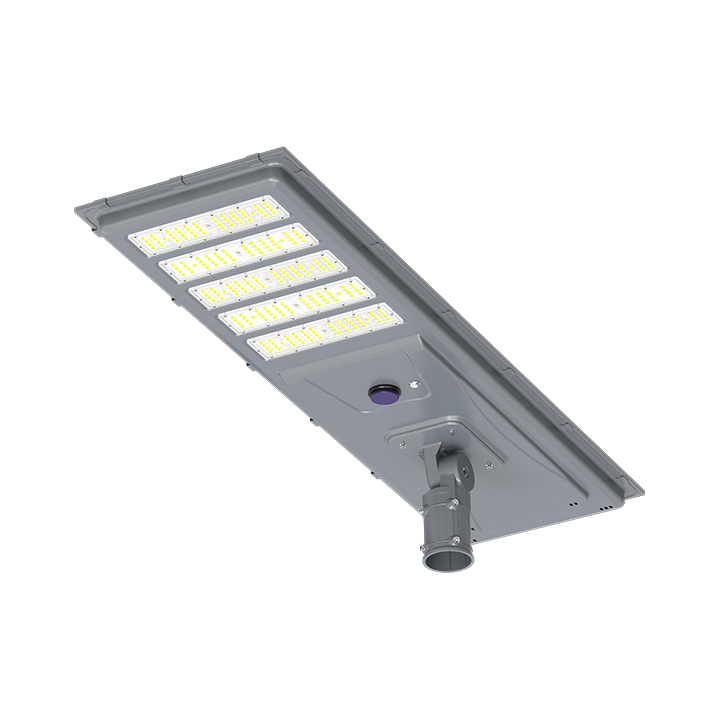
The Core Difference: Power Source, Not Light Source
The most important thing to understand is that the distinction between solar street lights and LED street lights is about how they are powered, not how they produce light. Nearly all modern solar street lights already use LED technology as their light source. The real difference lies upstream: solar street lights generate and store their own electricity via a photovoltaic panel and battery, while grid-connected LED street lights draw power from the utility network through underground cables.
In practical terms, a "solar street light" describes a complete off-grid energy system, whereas an "LED street light" typically refers to a grid-tied fixture that has simply replaced an older lamp technology — such as high-pressure sodium or metal halide — with an LED module. Choosing between the two is fundamentally a decision about energy infrastructure, not luminaire technology.
How Each System Is Powered
Solar Street Lights: Self-Contained Energy Generation
A solar street light is an autonomous energy unit. It consists of a photovoltaic (PV) panel that converts sunlight into direct current (DC) electricity, a rechargeable battery that stores the energy during the day, a charge controller that manages charging and protects the battery, and an LED lamp that consumes the stored power at night. The system has no connection to the electrical grid and requires no external power supply of any kind.
Grid-Connected LED Street Lights: Utility-Powered Fixtures
A grid-connected LED street light draws alternating current (AC) electricity from the local utility network. Power is delivered through underground conduit and distribution cabinets to each pole. The fixture contains a driver (power supply unit) that converts AC to the regulated DC voltage required by the LED module. The light operates whenever the grid supplies power and a timer or photosensor activates it.
Installation: Off-Grid Simplicity vs. Grid Infrastructure Requirements
Installation requirements differ significantly between the two systems and are often the deciding factor in project planning.
Solar street lights require only a foundation pole and anchoring hardware. Because there is no cable to route, no conduit to lay, and no grid connection to establish, a two-person crew can typically install a unit in under two hours. This makes them especially practical in locations where trenching is difficult — rocky terrain, established urban pavement, or protected land areas.
Grid-connected LED street lights require civil works including trench excavation, underground conduit installation, and connection to the distribution network. Depending on the project scale and local utility requirements, this process can take several days per section of road and involves coordination with the electricity provider for inspection and grid connection approval.
- Solar: no trenching, no permits for grid connection, relocatable if needed
- Grid LED: requires civil works, electrical permits, and utility sign-off
- Solar installation disruption to existing pavement: minimal to none
- Grid LED installation in established urban areas: may require road closures
Operating Costs and Energy Expenses Over Time
Once installed, the long-term cost structure of the two systems diverges considerably.
Grid-connected LED street lights consume electricity continuously every night. A 60W LED fixture running for 11 hours per night consumes approximately 241 kWh per year. Multiply this across a city's infrastructure — say 20,000 lights — and annual electricity costs can reach into the millions of dollars, subject to ongoing utility rate increases.
Solar street lights, once installed, have zero energy costs. The only recurring expense is battery replacement, typically every 5–8 years for lithium iron phosphate (LiFePO4) batteries. This predictable, one-time maintenance cost is far lower than cumulative electricity bills over the same period in most regions.
Reliability: Grid Outages vs. Weather Dependence
Both systems have a distinct vulnerability, but of different types.
Grid LED Lights: Vulnerable to Power Outages
Grid-connected LED street lights go dark the moment utility power fails. During storms, grid faults, or rolling blackouts, entire streets can lose lighting simultaneously — creating serious safety hazards on roads and in public spaces precisely when reliable illumination may be most needed.
Solar Street Lights: Vulnerable to Extended Low-Light Periods
Solar street lights are immune to grid outages but depend on solar energy availability. A well-engineered system is typically sized to provide 3 to 5 consecutive nights of full operation without any solar charge, covering the vast majority of cloudy weather events. However, in high-latitude regions with long winters and limited daylight, system sizing must be carefully calculated to ensure adequate battery reserve through the lowest-irradiance months.
Light Output and Illumination Performance
In terms of raw illumination quality, both systems can achieve equivalent performance — because both use LED technology as the light source. Key metrics such as luminous efficacy, color rendering index (CRI), and color temperature are comparable across well-specified products in both categories.
However, there is a practical difference in available wattage. Grid-connected LED street lights can draw as much power as needed from the grid, making them well suited for high-wattage applications such as motorway lighting or large intersections — installations requiring fixtures of 150W, 200W, or more. Solar street lights must balance output power against what the solar panel and battery can realistically supply, which creates a practical upper limit. While high-output solar street lights reaching 100–200W equivalent exist, they require large panel arrays and substantial battery banks, increasing the complexity and footprint of the installation.
For standard road lighting (residential streets, parking lots, pathways, secondary roads), solar street lights deliver fully adequate illumination levels, typically in the range of 3,000 to 12,000 lumens depending on the model.
Environmental Impact: Carbon Footprint Comparison
Both systems represent a significant improvement over older street lighting technologies such as high-pressure sodium lamps, but their environmental profiles differ in one key respect: the carbon intensity of the electricity supply.
Grid-connected LED street lights reduce energy consumption compared to legacy fixtures — typically by 50–60% — but their operational carbon footprint depends entirely on how the local electricity grid is generated. In regions where coal or gas dominate the energy mix, grid LED lights still produce meaningful CO2 emissions per operating hour.
Solar street lights produce zero operational carbon emissions, regardless of the local grid's energy mix. A single solar street light replacing a 100W conventional fixture can prevent approximately 0.4–0.6 tonnes of CO2 per year in a coal-heavy grid region. For municipalities with net-zero or carbon neutrality commitments, solar street lights offer a direct and measurable contribution.
Maintenance Requirements for Each System
Maintenance needs differ in both type and frequency between the two systems.
For grid-connected LED street lights, the LED module itself has a long lifespan of 50,000+ hours, but the broader infrastructure — underground cables, junction boxes, distribution cabinets, and pole wiring — requires periodic inspection, and faults in the cable network can affect multiple lights simultaneously. Fault-finding in buried cable systems can be time-consuming and costly.
For solar street lights, maintenance is largely limited to:
- Periodic cleaning of the solar panel surface (dust, bird droppings, and debris reduce output)
- Battery replacement every 5–8 years (LiFePO4) or 2–4 years (lead-acid)
- Occasional firmware updates for smart/IoT-enabled models
Because each solar unit is independent, a fault affects only one light rather than a string of fixtures on a shared circuit — simplifying fault isolation and repair.
Side-by-Side Comparison: Solar Street Lights vs. Grid LED Street Lights
| Factor | Solar Street Lights | Grid-Connected LED Street Lights |
|---|---|---|
| Power Source | Solar panel + battery (off-grid) | Utility grid (AC) |
| Light Source | LED | LED |
| Installation Complexity | Low (no trenching or grid connection) | High (civil works, permits, utility approval) |
| Operating Energy Cost | Zero | Ongoing electricity bills |
| Grid Outage Resilience | Fully independent | Fails during blackouts |
| Maximum Output Wattage | Practical limit ~100–200W | Unlimited (grid-supplied) |
| Operational Carbon Emissions | Zero | Depends on local grid energy mix |
| Remote Area Suitability | Excellent | Limited by grid availability |
| Recurring Maintenance | Battery replacement (every 5–8 yrs), panel cleaning | Cable/infrastructure inspection, driver replacement |
Which Is Better for Remote or Developing Area Applications?
For off-grid or underserved locations, solar street lights are the only practical option. Extending the utility grid to remote villages, rural highways, or construction sites involves substantial infrastructure investment that is often economically unjustifiable for low-density populations. Solar street lights bypass this entirely, delivering immediate, reliable illumination with no dependency on grid infrastructure.
Large-scale solar street lighting programs across sub-Saharan Africa, South Asia, and Latin America have illuminated millions of road kilometers in regions where grid extension would have taken decades. In these contexts, a solar street light is not just a lighting choice — it is the only viable solution.
Which Is Better for High-Density Urban Infrastructure?
In established urban environments with existing grid infrastructure, both systems are viable. The decision typically comes down to three considerations:
- Lighting load requirements: For major arterials, motorways, or large intersections requiring very high lumen output, grid-connected LED street lights offer greater flexibility in wattage.
- Sustainability targets: Cities with net-zero commitments benefit more directly from solar street lights, which eliminate operational carbon emissions entirely rather than reducing them.
- Pavement disruption tolerance: In densely trafficked urban areas where road excavation is disruptive and expensive, solar street lights eliminate the need for trenching altogether.
Many cities are now deploying a hybrid approach — installing grid-connected LED fixtures on major roads and solar street lights on secondary streets, parking areas, pathways, and parks — to maximize the advantages of each system where they are best suited.
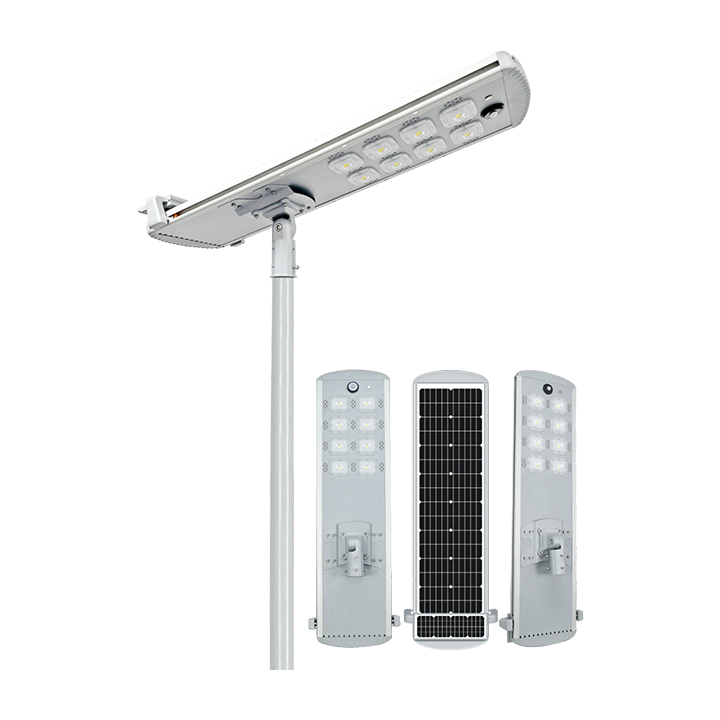
The Direct Answer: How Long a Solar Street Light Lasts
A well-designed solar street light system has an overall operational lifespan of 15 to 25 years, though this figure depends on which component you are measuring. The solar panel is the longest-lasting part, typically rated for 20–25 years. The LED light source lasts 50,000 hours or more (roughly 11–13 years at 11 hours per night). The battery is the component that requires the earliest replacement — every 5–8 years for lithium iron phosphate (LiFePO4) types and every 2–4 years for lead-acid variants.
In practical terms, a solar street light installation can continue operating for two decades with one or two battery replacements along the way — making the system's total service life comparable to that of a grid-connected street light infrastructure, but with significantly lower ongoing costs.
Lifespan of Each Component Explained
Because a solar street light is a multi-component system, each part has its own degradation curve and replacement schedule. Understanding these individually helps set realistic maintenance expectations.
Solar Panel: 20–25 Years
Monocrystalline silicon panels — the standard in solar street lights — are rated for a service life of 20 to 25 years. They do not fail suddenly; instead, their power output degrades gradually over time. Most quality panels carry a linear power output warranty guaranteeing at least 80% of rated output after 25 years, which translates to an annual degradation rate of approximately 0.5–0.7%. This slow decline means the panel continues to function usefully well beyond its rated period, just at slightly reduced efficiency.
LED Light Source: 50,000–100,000 Hours
High-quality LED modules used in solar street lights are rated at 50,000 to 100,000 hours of operational life before reaching L70 — the point at which output has declined to 70% of the original lumen value. At a typical operating schedule of 11 hours per night, 50,000 hours represents approximately 12.5 years of continuous nightly use. Premium LED chips can extend this to over 20 years before meaningful lumen depreciation occurs.
LEDs do not burn out abruptly like incandescent lamps. They dim progressively, meaning the light remains functional long past the L70 threshold — it simply delivers less output than when new.
Battery: 5–8 Years (LiFePO4) or 2–4 Years (Lead-Acid)
The battery is the shortest-lived and most frequently replaced component in a solar street light system. Battery lifespan is measured in charge cycles — the number of times it can be fully charged and discharged before its capacity degrades to an unacceptable level (typically 80% of original capacity).
- Lithium Iron Phosphate (LiFePO4): 2,000–3,000 charge cycles, equating to approximately 5–8 years of daily cycling. Performs well across a wide temperature range (-20°C to 60°C) and maintains capacity reliably through most of its rated life.
- Ternary Lithium (NMC/NCA): 1,000–2,000 cycles, approximately 3–5 years. Higher energy density but more temperature-sensitive than LiFePO4.
- Lead-Acid (GEL/VRLA): 300–500 cycles, approximately 2–4 years. Lower upfront cost but significantly shorter service life and heavier weight.
Charge Controller: 10–15 Years
The charge controller manages energy flow between the panel, battery, and LED. Built with solid-state electronics and no moving parts, it is generally reliable for 10 to 15 years under normal operating conditions. MPPT controllers, the current standard, have proven durability and are typically rated for this range by manufacturers.
Structural Pole and Housing: 20–30 Years
The galvanized steel or aluminum pole, lamp housing, and mounting brackets are the most durable elements of the system. Hot-dip galvanized steel poles typically carry corrosion warranties of 20 to 30 years. The die-cast aluminum lamp housing — if rated to IP65 or higher — provides effective long-term protection against water ingress, dust, and UV degradation.
Component Lifespan at a Glance
| Component | Expected Lifespan | Replacement Needed? | Key Degradation Mode |
|---|---|---|---|
| Solar Panel | 20–25 years | Rarely within 20 years | Gradual power output decline (~0.5–0.7%/yr) |
| LED Module | 50,000–100,000 hrs (~12–20 yrs) | Once per system lifecycle | Gradual lumen depreciation (L70) |
| LiFePO4 Battery | 5–8 years | 2–3 times over 20 years | Cycle-based capacity loss |
| Lead-Acid Battery | 2–4 years | 5–10 times over 20 years | Sulfation, capacity fade |
| Charge Controller | 10–15 years | Once per system lifecycle | Electronic component aging |
| Pole and Housing | 20–30 years | Rarely | Corrosion (if coating fails) |
What Shortens a Solar Street Light's Lifespan
Several environmental and operational factors can significantly accelerate component degradation and reduce the effective lifespan of a solar street light system below its rated potential.
Extreme Temperatures
High ambient temperatures are the single greatest threat to battery longevity. Lithium batteries operating consistently above 40°C experience accelerated chemical degradation — each 10°C increase above the optimal range can reduce cycle life by 20–30%. In desert climates where summer ground-level temperatures can exceed 50°C, battery compartments should be shaded or ventilated to limit thermal stress. Cold climates below -20°C can also reduce available battery capacity temporarily, though well-rated LiFePO4 batteries recover capacity when temperatures rise.
Repeated Deep Discharge
Discharging a battery beyond its recommended depth of discharge (DoD) shortens its cycle life substantially. For LiFePO4 batteries, a DoD of 80% is typically specified. Systems that are undersized for their location — where cloudy periods regularly drain the battery below this threshold — will experience faster capacity degradation. A properly sized system prevents this by building in sufficient reserve capacity for the local climate's worst-case consecutive cloudy days.
Poor Charge Controller Quality
A low-quality or incorrectly configured charge controller can allow the battery to overcharge or over-discharge — both of which irreversibly damage cells. Overcharging causes electrolyte decomposition in lithium cells; over-discharging causes copper dissolution and internal short circuits. Using a quality MPPT controller with accurate battery voltage calibration is essential to achieving rated battery lifespan.
Inadequate IP Rating and Moisture Ingress
Solar street lights installed in coastal areas, humid tropical climates, or regions with heavy rainfall need housings rated to at least IP65, and ideally IP66 or IP67. Moisture entering the LED driver, battery compartment, or charge controller circuit board causes corrosion and premature electronic failure. Sealing quality degrades over time, so periodic inspection of gaskets and enclosure integrity is a worthwhile maintenance practice.
Panel Surface Contamination
Dust, bird droppings, and airborne particulates accumulate on the panel surface and reduce light transmission to the photovoltaic cells. Studies of solar installations in arid regions show that uncleaned panels can lose 15–25% of their output within a few months. While this does not damage the panel itself, it shortens effective daily charging time and increases the frequency with which the battery reaches deep discharge states — indirectly shortening battery life.
How to Maximize the Lifespan of a Solar Street Light
Achieving the upper end of the rated lifespan for each component requires a combination of correct initial system design, quality component selection, and routine maintenance. The following practices make the most meaningful difference:
- Choose LiFePO4 over lead-acid batteries. The longer cycle life of LiFePO4 reduces replacement frequency from up to 10 times over 20 years (lead-acid) to just 2–3 times, dramatically cutting total maintenance effort and cost.
- Size the system correctly for local solar irradiance. A system sized for your region's lowest-irradiance month prevents chronic deep discharge, which is the leading cause of premature battery failure.
- Install an MPPT charge controller with temperature compensation. Temperature-compensating charge controllers adjust target charge voltage based on ambient temperature, protecting the battery from overcharge in hot weather and undercharge in cold weather.
- Clean the solar panel every 3–6 months. A clean panel charges the battery fully each day, reducing the depth of discharge and extending battery cycle life. In dusty or desert environments, monthly cleaning may be warranted.
- Inspect housing seals annually. Check that enclosure gaskets remain intact and that no water has penetrated the LED driver or battery compartment. Re-seal or replace gaskets as needed.
- Use smart dimming and motion control. Reducing LED output during low-traffic hours decreases nightly energy draw, lowering battery depth of discharge each cycle and extending cumulative battery life.
How Battery Chemistry Choice Affects Total System Lifespan
Because the battery is the first component to require replacement, the choice of battery chemistry has the most direct impact on how much maintenance a solar street light requires over its operational life. The table below illustrates the long-term replacement implications of each chemistry over a 20-year period:
| Battery Type | Cycle Life | Service Life (Years) | Replacements Over 20 Years | Temperature Tolerance |
|---|---|---|---|---|
| LiFePO4 | 2,000–3,000 | 5–8 | 2–3 times | -20°C to 60°C |
| Ternary Lithium (NMC) | 1,000–2,000 | 3–5 | 4–6 times | -10°C to 45°C |
| Lead-Acid (GEL/VRLA) | 300–500 | 2–4 | 5–10 times | 0°C to 40°C |
Signs That a Solar Street Light Component Is Nearing End of Life
Knowing when to replace a component before it fails completely helps avoid sudden lighting outages and preventable damage to other parts of the system. Key warning signs include:
- Light switching off earlier each night: This indicates the battery can no longer hold sufficient charge to power the LED through the full operating period — a clear sign of capacity fade requiring battery replacement.
- Reduced brightness even on full charge: Could indicate LED lumen depreciation reaching the L70 threshold, or voltage supply issues from a degraded battery or controller.
- Failure to charge during sunny days: May point to panel surface contamination, cell delamination, or a controller fault. Clean the panel first; if no improvement follows, inspect the panel and controller.
- Visible discoloration or bloating of the battery housing: Indicates thermal runaway risk or severe cell degradation. The battery should be replaced immediately.
- Corrosion on connectors or housing joints: Suggests moisture ingress, which should be addressed promptly to prevent damage spreading to the electronics inside.
For IoT-enabled solar street lights, battery state-of-health data, daily charge/discharge cycles, and fault alerts can be monitored remotely via a cloud dashboard — enabling proactive replacement scheduling before performance degradation becomes noticeable at street level.
Start Here: The Most Important Factors in Choosing a Solar Street Light
Choosing the best solar street light comes down to matching the system's specifications to the specific demands of your installation site. The four non-negotiable factors are: sufficient solar panel wattage for your local irradiance, adequate battery capacity for your required backup nights, appropriate LED lumen output for the road type, and a proven charge controller with MPPT technology. Every other feature — smart controls, motion sensing, IP rating, pole height — layers on top of this foundation.
A solar street light that looks impressive on a spec sheet but is undersized for the local climate will underperform within months. Conversely, an oversized system wastes budget on unnecessary capacity. The goal is precise matching of system capability to site requirements — and this guide walks through each decision point in the order that matters most.
Step One: Assess Your Local Solar Resource
The foundation of any solar street light selection is understanding how much sunlight your location receives. This is measured in peak sun hours (PSH) — the number of hours per day during which solar irradiance averages 1,000 W/m². PSH varies significantly by geography and season:
- Desert regions (Middle East, North Africa, Southwest USA): 5.5–7.5 PSH/day
- Tropical regions (Southeast Asia, sub-Saharan Africa): 4.5–6.0 PSH/day
- Temperate regions (Central Europe, northern China): 3.0–4.5 PSH/day
- High-latitude regions (Northern Europe, Canada): 1.5–3.5 PSH/day in winter
System sizing should be based on the worst-case month — typically December or January in northern latitudes — not the annual average. A system sized for summer PSH will run into chronic battery shortfalls during winter. Free tools such as NASA's POWER database or regional solar irradiance maps provide reliable PSH data for any location worldwide.
Step Two: Determine the Required Lumen Output for Your Application
Not every installation needs the same brightness. Selecting a light with the appropriate lumen output for the road class or area type prevents both under-illumination (a safety hazard) and over-specification (wasted battery capacity). International road lighting standards — such as EN 13201 in Europe and ANSI/IES RP-8 in North America — define illuminance requirements by road category.
| Application Type | Recommended Illuminance | Typical Lumen Range Needed | Typical LED Wattage |
|---|---|---|---|
| Pedestrian pathway / park | 5–10 lux | 2,000–4,000 lm | 20–30W |
| Residential street | 10–15 lux | 4,000–8,000 lm | 30–60W |
| Secondary / collector road | 15–20 lux | 8,000–14,000 lm | 60–100W |
| Arterial road / commercial area | 20–30 lux | 14,000–20,000 lm | 100–150W |
| Parking lot | 10–20 lux | 6,000–12,000 lm | 40–80W |
Note that pole height, pole spacing, and the optical beam distribution pattern of the luminaire all influence how many lumens are actually needed to achieve a target illuminance on the ground. A photometric simulation (DIALux or equivalent) for the specific pole layout gives the most accurate result.
Step Three: Choose the Right Battery Type and Capacity
Battery selection is the most consequential decision after system sizing, as it directly determines both maintenance frequency and long-term reliability. Lithium Iron Phosphate (LiFePO4) is the recommended chemistry for most solar street light applications due to its combination of long cycle life (2,000–3,000 cycles), wide operating temperature range (-20°C to 60°C), and stable chemistry with no thermal runaway risk.
How to Calculate Required Battery Capacity
The minimum battery capacity (in watt-hours) is calculated as:
Battery Capacity (Wh) = LED Wattage × Operating Hours per Night × Backup Days ÷ Depth of Discharge
For example, a 60W LED running 11 hours per night with 3 backup days and an 80% DoD requires: 60 × 11 × 3 ÷ 0.8 = 2,475 Wh of battery capacity. Always size for the worst-case backup period relevant to your climate — typically 3 to 5 consecutive cloudy days for most mid-latitude locations.
Avoid These Battery Red Flags
- Capacity claims that seem implausibly high for the physical size of the unit
- No stated cycle life or depth of discharge specification in the product documentation
- Lead-acid batteries presented as equivalent to lithium in terms of lifespan
- No independent certification (UN38.3, IEC 62133, or UL) for the battery cells
Step Four: Verify Solar Panel Wattage and Quality
The solar panel must generate enough energy each day to replenish what the LED consumes each night, with margin to also recharge the battery after cloudy periods. The minimum panel wattage is calculated as:
Panel Wattage = (LED Wattage × Operating Hours) ÷ Peak Sun Hours × Safety Factor (1.2–1.3)
For a 60W LED running 11 hours in a location with 4 PSH: (60 × 11) ÷ 4 × 1.25 = 206W panel as a minimum. The safety factor accounts for real-world panel losses from heat, dust, and non-ideal angle.
When evaluating panel quality, look for:
- Monocrystalline silicon cells — efficiency of 17–22%, superior to polycrystalline (15–17%) in space-constrained pole-top installations
- IEC 61215 and IEC 61730 certification — confirms the panel has passed standardized performance and safety testing
- Tempered anti-reflective glass — improves light transmission and resists impact damage
- Low temperature coefficient — panels with a Pmax temperature coefficient better than -0.40%/°C lose less output on hot days
Step Five: Evaluate the Charge Controller — MPPT Is the Standard to Insist On
The charge controller regulates all energy flow in the system. Its quality directly affects both battery longevity and system efficiency. Always choose a system with an MPPT (Maximum Power Point Tracking) controller rather than the older PWM (Pulse Width Modulation) type.
MPPT controllers are 15–30% more efficient than PWM in real-world conditions, particularly during partial cloud cover or early morning and late afternoon when panel output is below its rated peak. Over a full year, this efficiency difference meaningfully reduces the depth of daily battery discharge — extending battery cycle life in the process.
Additional controller features worth specifying:
- Temperature compensation: Adjusts target charge voltage based on ambient temperature to prevent overcharge in heat and undercharge in cold
- Low-voltage disconnect (LVD): Cuts power to the LED before the battery reaches a damaging discharge depth
- Programmable dimming schedules: Allows brightness to be reduced during low-traffic hours, reducing nightly discharge depth
- Real-time clock (RTC): Enables time-based switching rather than relying solely on a photosensor, providing more consistent seasonal performance
Step Six: Check the LED Quality — Lumens, Efficacy, CRI, and CCT
The LED module determines the quality of illumination delivered to the road surface. Four metrics matter most:
Luminous Efficacy (lm/W)
This measures how much visible light is produced per watt consumed. Higher efficacy means the same lumen output can be achieved with lower wattage — reducing the energy demand on the battery. Quality solar street light LEDs deliver 130–160 lm/W. Products claiming over 200 lm/W without third-party verification should be viewed skeptically.
Color Rendering Index (CRI)
CRI measures how accurately colors appear under the light compared to natural daylight (CRI 100). For road and public area lighting, a minimum CRI of 70 is generally required by standards, with CRI 80+ recommended for areas where pedestrian safety, security camera performance, or visual comfort is a priority. Higher CRI LEDs allow people to identify faces, read signs, and perceive hazards more accurately at night.
Correlated Color Temperature (CCT)
CCT describes the perceived color of the light, measured in Kelvin. The most common options for street lighting are:
- 3000K (warm white): Preferred in residential areas and historic districts — less disruptive to sleep cycles and local wildlife
- 4000K (neutral white): A balanced choice for mixed-use roads and commercial areas
- 5000–6000K (cool white): High visibility, suitable for industrial zones, highways, and parking lots — but not recommended near homes due to blue light content
Rated LED Lifespan (L70)
Verify that the LED module carries a rated lifespan of at least 50,000 hours to L70 — meaning output remains above 70% of the original value for at least 50,000 operating hours. This is the industry-standard minimum. Premium modules are rated at 70,000–100,000 hours.
Step Seven: Confirm IP Rating and Structural Durability for Your Environment
Solar street lights are outdoor installations exposed to weather, dust, insects, and physical impact. The IP (Ingress Protection) rating defines how well the luminaire housing resists these elements.
| IP Rating | Dust Protection | Water Protection | Recommended Environment |
|---|---|---|---|
| IP65 | Dust-tight | Protected against water jets | Standard outdoor use — minimum acceptable |
| IP66 | Dust-tight | Protected against powerful water jets | Heavy rainfall, coastal, or high-humidity areas |
| IP67 | Dust-tight | Immersion up to 1 meter for 30 minutes | Flood-prone areas, tropical monsoon regions |
Beyond IP rating, check the IK rating for impact resistance if vandalism is a concern — IK08 or IK10 indicates the housing can withstand significant impacts without cracking. For coastal environments, confirm the pole and housing material is hot-dip galvanized steel or marine-grade aluminum with appropriate surface treatment to resist salt corrosion.
Smart Features Worth Paying For — and Which to Skip
Modern solar street lights offer a wide range of optional features. Some deliver genuine value; others add complexity without proportionate benefit. Here is a practical assessment:
Features That Consistently Add Value
- PIR or microwave motion sensors: Reduce nightly energy consumption by 30–50% through adaptive dimming in low-traffic periods, directly extending battery life
- Multi-stage dimming schedules: Allow brightness to be programmed in timed steps through the night — high output at peak hours, reduced output in the early morning
- IoT remote monitoring: Enables real-time battery health, fault alerts, and energy generation data to be accessed via a cloud dashboard — valuable for managing large installations of 50+ units
- Anti-theft pole design: Tamper-resistant fasteners and concealed cable entries reduce vandalism and theft risk in high-risk locations
Features to Evaluate Carefully
- Integrated CCTV camera: Useful in specific security contexts but adds maintenance complexity and requires network connectivity for data transmission
- Built-in speaker or emergency alert: Adds value only in specific smart city or campus security deployments; unnecessary for standard road lighting
- Very high CCT (6500K+): Maximizes luminous efficacy but increases blue light emission — not appropriate for residential areas or wildlife-sensitive zones
Key Certifications and Quality Marks to Look For
Third-party certifications provide independent confirmation that a product meets defined performance and safety standards. When comparing solar street light products, the following certifications are the most meaningful:
- IEC 61215 / IEC 61730: Confirms the solar panel has passed standardized performance and electrical safety testing
- CE marking (Europe) / UL listing (North America): Confirms the luminaire and electrical components meet regional safety requirements
- UN38.3: Confirms the lithium battery has passed transport safety testing — a basic minimum for any lithium cell
- IEC 62133: Safety standard for rechargeable battery cells and batteries used in portable applications
- LM-79 / LM-80 test reports: Independent photometric testing confirming actual LED lumen output and lumen maintenance over time — essential for verifying efficacy claims
- IP rating tested to IEC 60529: Confirms the ingress protection rating has been verified by testing rather than self-declared
Be cautious of products that list certifications on marketing materials but cannot provide the actual test reports on request. A reputable supplier will provide test documentation without hesitation.
All-in-One vs. Split-Type: Which Configuration to Choose
Solar street lights come in two structural configurations, and the right choice depends on installation environment and power requirements.
All-in-one units integrate the solar panel, battery, LED, and controller into a single compact housing mounted on the pole top. They are faster to install, less vulnerable to cable theft, and well-suited for standard urban roads, parking lots, and pathways up to approximately 80–100W equivalent output.
Split-type systems mount the solar panel separately from the lamp head — sometimes on a separate arm or at a different angle. This configuration allows the panel to be independently oriented for optimal solar exposure, accommodates larger panel and battery sizes for high-wattage applications, and is better suited for high-latitude locations where panel tilt angle is critical for maximizing winter generation.
For most standard installations in mid-latitude or tropical regions, all-in-one is the simpler and faster choice. For high-output arterial road lighting or installations above 50° latitude, split-type offers meaningful performance advantages.
A Practical Checklist Before Finalizing Your Selection
Use this checklist to confirm every critical parameter has been addressed before committing to a solar street light product:
- Local peak sun hours confirmed for the worst-case month at the installation site
- Required lumen output determined based on road category and pole spacing
- Battery capacity calculated for required backup days at the specified LED wattage
- Battery chemistry confirmed as LiFePO4 with stated cycle life and DoD specification
- Solar panel wattage verified as sufficient for the local PSH with a 1.2–1.3 safety factor
- Charge controller confirmed as MPPT type with temperature compensation and LVD
- LED efficacy verified at 130 lm/W or higher, with LM-79 test report available
- IP rating at minimum IP65, upgraded to IP66 or IP67 for harsh environments
- Relevant certifications (IEC 61215, CE/UL, UN38.3, LM-79/80) confirmed with documentation
- Warranty terms reviewed — minimum 2 years on the complete system, 5 years on the solar panel
Previous Post
No previous article
Next Post
What are the advantages of LED street lights?
Related Products


If you are interested in our products, please consult us
CONTACT DETAILS
-
Guoji Lighting Industrial Park,Northern Suburb of Yangzhou City

-
+86-0514-84242668

-
[email protected]

PRODUCTS
QUICK LINK
QR CODE
Copyright © JIANGSU TIANHUANG LIGHTING GROUP CO.,LTD. All Rights Reserved.
China LED street light manufacturer Custom metal street light pole supplier